PROMPT RECORD图像记录
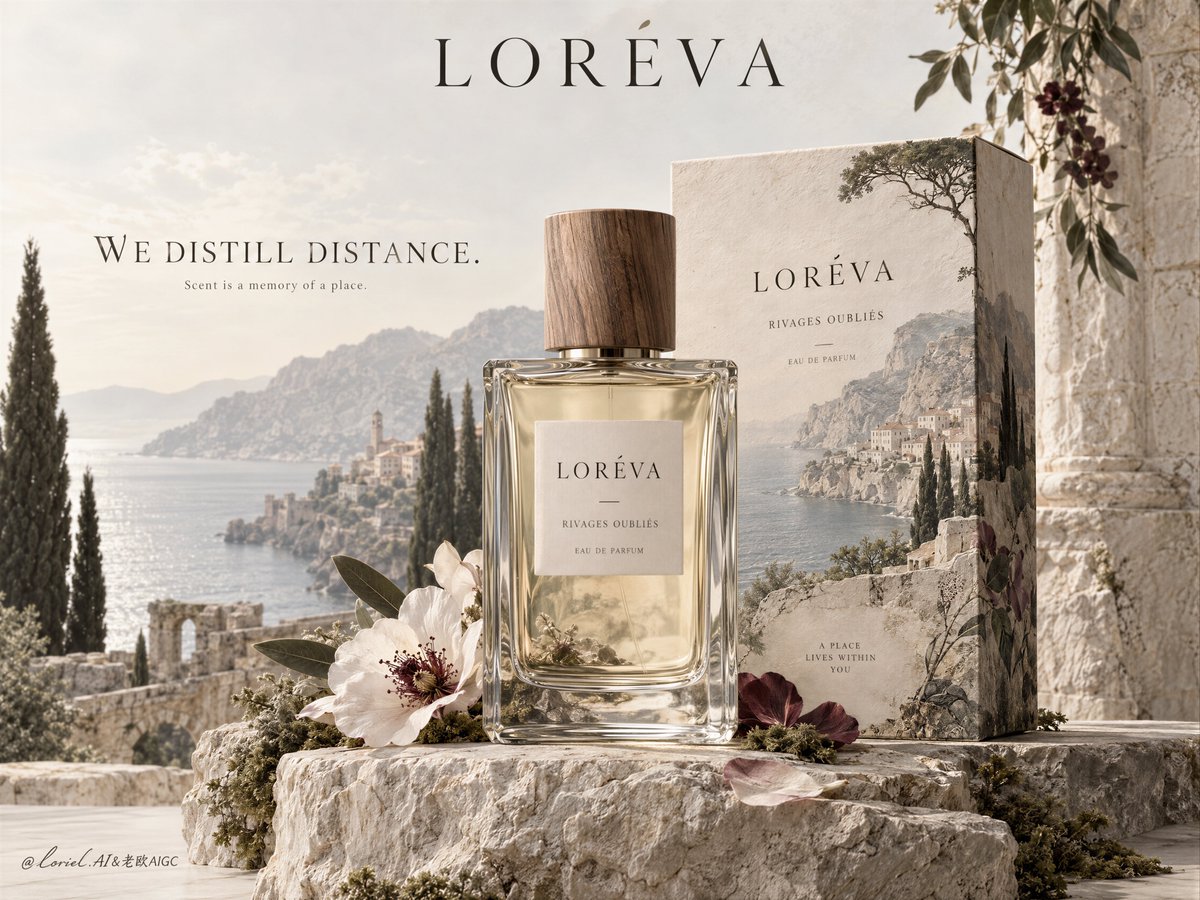
当瓶子成为你唯一不去装饰的地方时,香水的世界会显得更为丰盈。 🌿 让褪色的海岸线、柏树剪影与石筑村落融入淡雅的背景,并重新浮现为风化的纸盒艺术 空间环绕着香气,让包装仿佛成为这份记忆的一部分。...
中文说明
当瓶子成为你唯一不去装饰的地方时,香水的世界会显得更为丰盈。 🌿 让褪色的海岸线、柏树剪影与石筑村落融入淡雅的背景,并重新浮现为风化的纸盒艺术 空间环绕着香气,让包装仿佛成为这份记忆的一部分。 🪨 将香水瓶居中置于前方,呈现清晰的玻璃边缘、浅色液体,以及简约的岩石与苔藓底座 让物体保持纯净与可读。风景化为氛围——而非覆盖产品的图案。 GPT- image 2.5 prompt👇 为一家名为 LORÉVA 的虚构高级定制香水品牌,创作一幅博物馆级别的香水广告主视觉图。设计为一幅高格调的编辑级整体构图,让真实的香水瓶与其包装成为诗意景观装置的中心。请将参考图的结构智慧作为纯粹的设计逻辑予以保留:前景中一只居中的矩形玻璃香水瓶、其后方一只略高的包装盒、底部一座雕塑感的矿物底座,以及在产品后方并部分贯穿产品的、被柔和消...
原始 Prompt
A fragrance world feels richer when the bottle is the one place you don’t decorate.
🌿 let the faded coastline, cypress silhouettes, and stone village dissolve into the pale background and reappear as weathered carton artwork
The place surrounds the scent and makes the packaging feel like part of its memory.
🪨 keep the bottle centered in front, with clear glass edges, pale liquid, and a simple rock-and-moss pedestal
The object stays pristine and readable. The landscape becomes atmosphere—not a pattern covering the product.

GPT- image 2.5 prompt👇
Create a museum-grade fragrance advertising hero image for a fictional couture perfume house named LORÉVA, designed as a single elevated editorial composition where a real perfume bottle and its packaging become the center of a poetic landscape installation. Preserve the structural intelligence of the reference as pure design logic: one centered rectangular glass perfume bottle in the foreground, one slightly taller packaging box behind it, a sculptural mineral pedestal beneath, and a softly dissolved destination-world unfolding behind and partly through the product. The final image must be more artistic, more restrained, and more luxurious than a conventional fragrance ad, reading like a collectible gallery poster and a high-fashion website hero at the same time.

The product is the absolute hero. The bottle must be photoreal and exquisitely rendered: thick transparent glass walls, elegant proportions, pale luminous fragrance liquid, subtle refraction and reflection, crisp shoulder edges, a warm natural wood cap with visible grain, and a clean label with refined typography. The packaging box behind it must feel like a premium paper object with tactile matte texture and softly weathered printed artwork, extending the same atmospheric landscape language as if the scent’s world lives inside the packaging. The bottle must dominate through clarity, stillness, and material precision, while the box functions as a quiet architectural support.

The concept is that scent contains a place, but the place is rendered as memory rather than illustration. Build a pale, cultured, painterly-photoreal Mediterranean landscape rising behind and around the product: faded coastal mountains, distant shoreline, cypress silhouettes, softened stone villages, mineral air, and restrained botanical traces. This world should feel washed in time, almost like a restored fresco or hand-tinted landscape memory, not a literal travel postcard. The environmental imagery should dissolve gently into the pale background and partially into the box surface, creating an impression that perfume is a vessel for atmosphere, distance, and silence.

At the base, build a sculpted still-life pedestal using pale rock, moss, weathered stone, muted dried stems, one or two softly toned flowers, and delicate translucent petals. These elements must feel curated and minimal, never crowded. The still-life should support the bottle like a fragrance altar rather than decorative styling. Reduce any unnecessary prop abundance and let emptiness play an active role in the composition.

Color hierarchy: 60% parchment ivory, limestone beige, chalk white, and pale mineral paper tones; 20% moss green, cypress green, dry olive, and soft botanical grey-green; 15% muted wine, dusty plum, faded sienna, and floral burgundy accents; 5% clear glass highlights and crisp dark typography. Lighting is soft and intelligent: diffused daylight from the front-left, refined shadow pooling under the glass, subtle highlight lines along bottle edges, a quiet glow through the liquid, and atmospheric depth in the landscape field. Keep contrast low but sophisticated, with volume and separation achieved through material response rather than harsh dramatic lighting.

Typography must be colder, fewer, and more elevated. Place the brand name "LORÉVA" at the top center in a refined high-contrast serif with generous breathing room. On the left open space, place only one statement line in elegant serif capitals: "WE DISTILL DISTANCE." Add one very small supporting line beneath it, brief and intelligent, about scent, memory, and place. Keep all other interface text minimal or nearly absent. Typography should feel like part of a luxury exhibition layout, not a commercial web banner, and must never compete with the bottle.

Material semantics must be explicit and exquisite: thick glass refraction, matte paper carton fibers, natural wood grain, soft stone powder, translucent petal veins, restrained floral depth, and atmospheric landscape pigment softness. The fusion between object and world must feel seamless, as if the fragrance has condensed an entire geography into one vessel. Every element should feel intentional, rarefied, and calm.

Rendering target: photoreal luxury perfume campaign, fine-art still-life precision, editorial sophistication, high-end print finish, product-dominant hierarchy, restrained visual poetry, elegant negative space, and international gallery-level aesthetic.

Structured exclusion constraints: no real fragrance brand names, no copied text, no cluttered florals, no excessive decorative crystals, no distorted bottle geometry, no warped label, no unreadable typography, no random letters, no muddy color, no dirty haze, no busy prop styling, no style drift, no cheap beauty-commerce look, no AI artifacts.