PROMPT RECORD图像记录
“糟糕”的 AI 提示词可以生成美丽的图像。 但“优秀的”提示词能生成有意图的图像。 AI 提示词架构。这就是基础。 当然,你可以去 Grok 或 GPT 输入“Create an image...
中文说明
“糟糕”的 AI 提示词可以生成美丽的图像。 但“优秀的”提示词能生成有意图的图像。 AI 提示词架构。这就是基础。 当然,你可以去 Grok 或 GPT 输入“Create an image of a train”,它会很好地完成这项工作,生成一张不错的图像。但是,那些不仅了解 AI,还懂得灯光、电影摄影、镜头、胶片、构图艺术的人,有着巨大的优势! AI 对结构化的视觉层级响应最佳。 AI 阅读提示词时,几乎像是带有权重的视觉优先级。 靠前的词更重要,重复的概念会增强力度,强烈的视觉描述会覆盖弱化的描述。 示例: 糟糕——“A train in the evening with fog and cinematic lighting maybe dark and realistic.” 优秀——“1940s s...
原始 Prompt
"BAD" AI prompts can produce beautiful images.
But "GOOD" prompts produce, intentional images.
AI Prompt Architecture. This is the foundation.

Sure, you could go to Grok or GPT and type "Create an image of a train" and it will do a good job of creating a decent image. But those who understand not only AI, but the art of lighting, cinematography, lenses, film stock, composition, have a huge advantage!

AI responds best to structured visual hierarchy.
AI reads prompts almost like weighted visual priorities.
Earlier words matter more, repeated concepts gain strength, and strong visual descriptors override weak ones.
Examples:
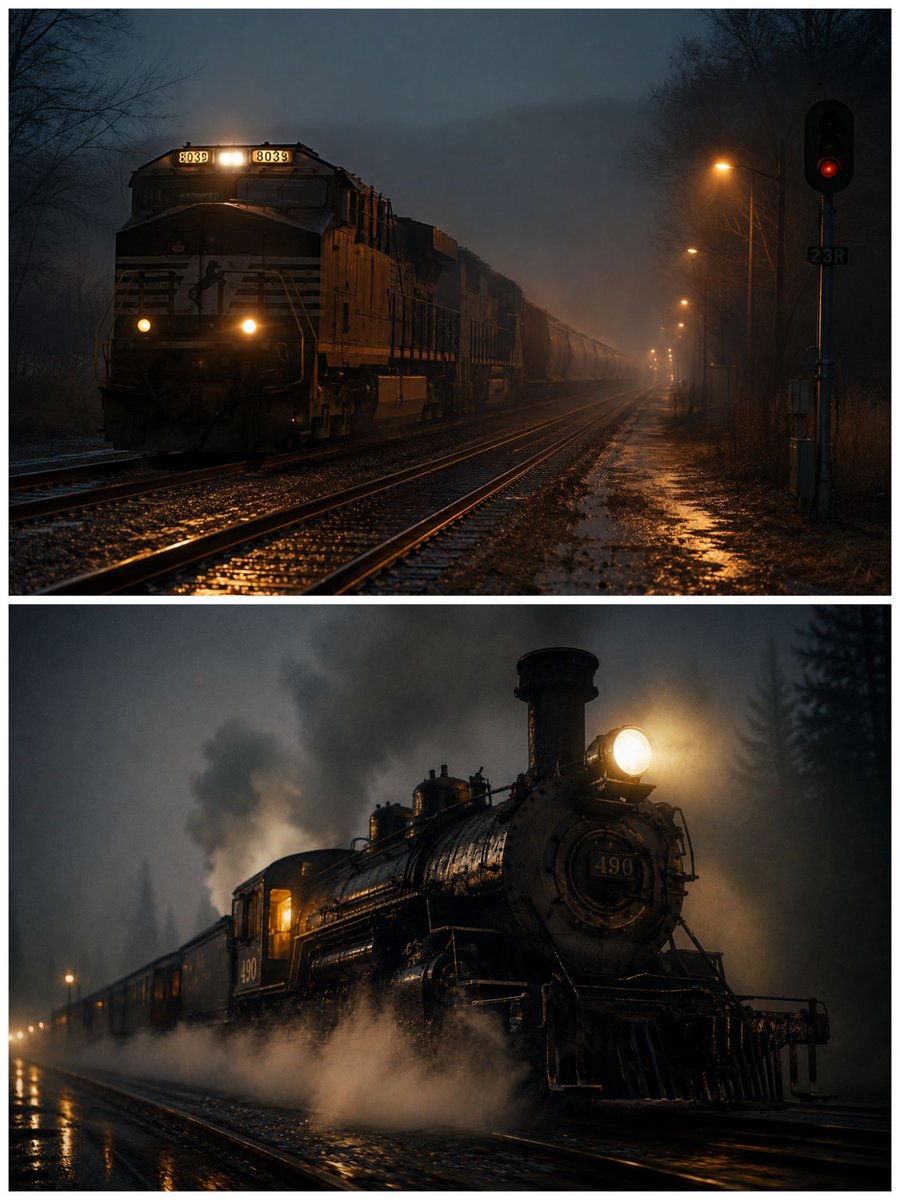
BAD - “A train in the evening with fog and cinematic lighting maybe dark and realistic.”

GOOD - “1940s steam locomotive cutting through dense evening fog, cinematic low-angle tracking shot, warm practical cabin lighting, volumetric steam illuminated by headlamp, wet steel reflections, shallow depth of field, Kodak Vision3 film look.”

Some would say "So, both look good."
Yes, on first inspection both look great. This is called latent prior knowledge.
The AI model already contains aesthetic assumptions.
Modern AI models are now extremely good at filling in missing information. They now have HUGE latent knowledge. But pay attention closely to the finer cinematic details that make these images different on close inspection.

The “bad” prompt image: is more generic, more photographically average, more compositionally safe, emotionally broader, less stylized, and less intentional
The "Good" prompt of the steam locomotive feels ,
authored, directed, emotionally targeted.

So why did the "Bad" prompt generate a modern diesel train engine? Simple. Because statistically, modern trains dominate image datasets online.

That’s the difference. Some may know how to prompt, but knowing what makes a cinematic image work is key in directing that prompt.