 1/2
1/2
PROMPT RECORD图像记录
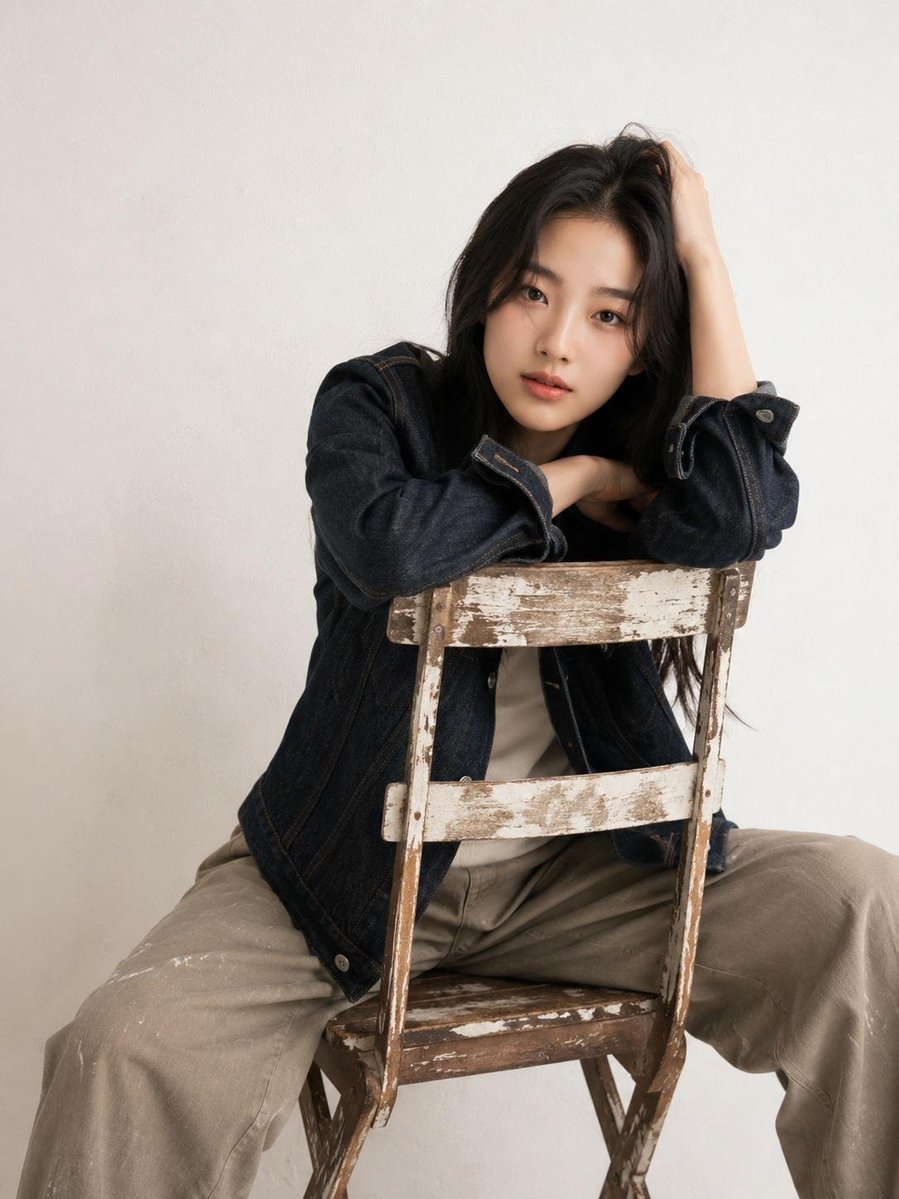
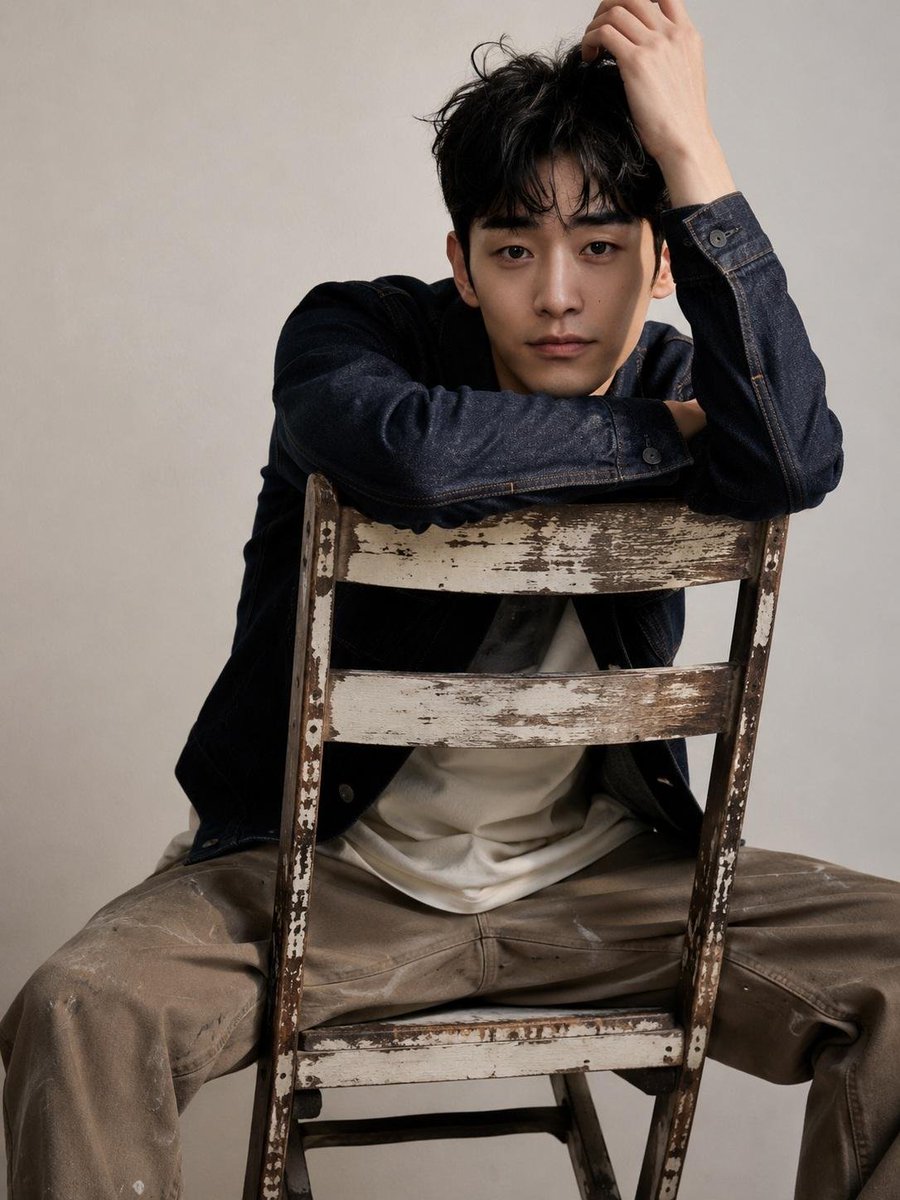
创作一张克制风格的影棚时尚肖像照,严格采用 736:981 的竖向宽高比,进行全身竖向裁切。头顶上方的抬起手部被画面顶边物理裁切,预留 0% 顶部留白;双脚被画面底边裁切。人物位于画面中心略偏...
中文说明
创作一张克制风格的影棚时尚肖像照,严格采用 736:981 的竖向宽高比,进行全身竖向裁切。头顶上方的抬起手部被画面顶边物理裁切,预留 0% 顶部留白;双脚被画面底边裁切。人物位于画面中心略偏右,占画面约 83%。最大负空间为暖色调近白色墙面,覆盖画面约 24%,从左上延伸至中左区域。将一把陈旧的木质折叠椅置于中心前景,垂直分割构图并部分遮挡人物的躯干与骨盆。相机约置于眼睛高度,朝下倾斜 3–5°。躯干以对角线方向偏离相机,而面部转向镜头方向。人物在低垂厚重的眼睑下直视相机。采用中等拍摄距离,搭配轻度长焦人像镜头透视。避免广角畸变、头部比例过大以及明显的相机倾斜。 姿势:人物坐在椅子后方,身体深深前倾靠在椅背上。肩线向对角下方延伸至右下。一侧手肘紧压在椅背顶部横档上以作支撑,前臂在面部下方横过。另一侧手臂向上弯...
原始 Prompt
Create a restrained studio fashion portrait with an exact vertical aspect ratio of 736:981 in a full-body vertical crop. The raised hand above the head is physically cropped by the top edge with 0% headroom, and both feet are cropped by the bottom edge. Position the subject slightly right of center, occupying approximately 83% of the frame. Leave the largest negative space as a warm off-white wall covering about 24% of the frame from the upper-left to middle-left. Place a worn wooden folding chair in the center foreground, vertically dividing the composition and partially obscuring the torso and pelvis. Use a camera positioned approximately at eye level with a 3–5° downward tilt. The torso angles diagonally away from the camera while the face turns back toward the lens. The subject looks directly into the camera beneath low, heavy eyelids. Use a medium camera distance with a mild telephoto portrait-lens perspective. Avoid wide-angle distortion, oversized head perspective, and noticeable camera roll.

Pose: The subject sits behind the chair, leaning deeply over the chair back. The shoulder line descends diagonally toward the lower right. One elbow presses firmly on the top rail of the chair back for support, with the forearm crossing beneath the face. The opposite arm bends upward, with the palm gripping the hair above the crown. The pelvis sits low behind the chair. Both knees are spread wide and cropped by the bottom of the frame. Weight is naturally supported through the chair, the supporting elbow, and the seated pelvis, maintaining realistic spinal and wrist alignment.

Use one old wooden folding chair with chipped white paint, dark brown wood, two horizontal back slats, and a visible seat. Approximate placement: x23–66, y39–96, occupying about 31% of the frame. The chair remains in front of the subject, obscuring the center torso and pelvis. Pose anchors: head center x48 y16; raised hand x43 y2 (cropped by top edge); elbow touching chair back x37 y36; wrist beneath face x48 y30; left knee x16 y76; right knee x84 y78; both feet cropped. Depth order: foreground—chair and arms; focus plane—face, upper torso, chair back; mid-ground—spread thighs; background—plain warm gray off-white studio wall.

Use an adult editorial long-line silhouette with visible proportions of approximately 18% head width, 19% head height, and 52% shoulder width. The neck remains visible but partially compressed by the folded posture. Maintain a relatively small head, mature skeletal structure, long forearms, high natural waist and pelvis, and long thighs. The lower body is partially hidden by the chair and crop. Never invent unseen calves or feet. If the target image lacks body information, use these adult proportions. Never produce infantilized proportions, oversized heads, short legs, or unusually small hands or feet.

Illuminate the scene with one directional studio light from camera-right. Brightest areas are the right side of the face, right ridge of the nose, upper forehead, and the chipped white paint on the chair's right side. Preserve deep shadows around the left eye socket, left temple, and lower left face. Maintain warm beige skin tones with cool indigo clothing and cool gray-brown shadows. Bloom is essentially zero. Keep the image sharp with no meaningful blur. Do not introduce motion smear, double edges, optical defocus, or halation.

Exposure behaves like a spatial mask: the wall at x0–30 remains high-key warm off-white; the left half of the face (x39–48) stays in shadow; the right cheekbone and forehead (x50–61) receive localized highlights. Dark clothing remains at least two tonal stops darker than