 1/4
1/4
PROMPT RECORD图像记录
为每一张我上传的地方美食照片,制作一张独立的、高端的"食材观察旅行拼盘"编辑海报。每张照片单独成稿——不要将多张照片、多份拼盘或多道菜拼合到同一张作品中。 **输入:** 一份完整独立的拼盘或...
中文说明
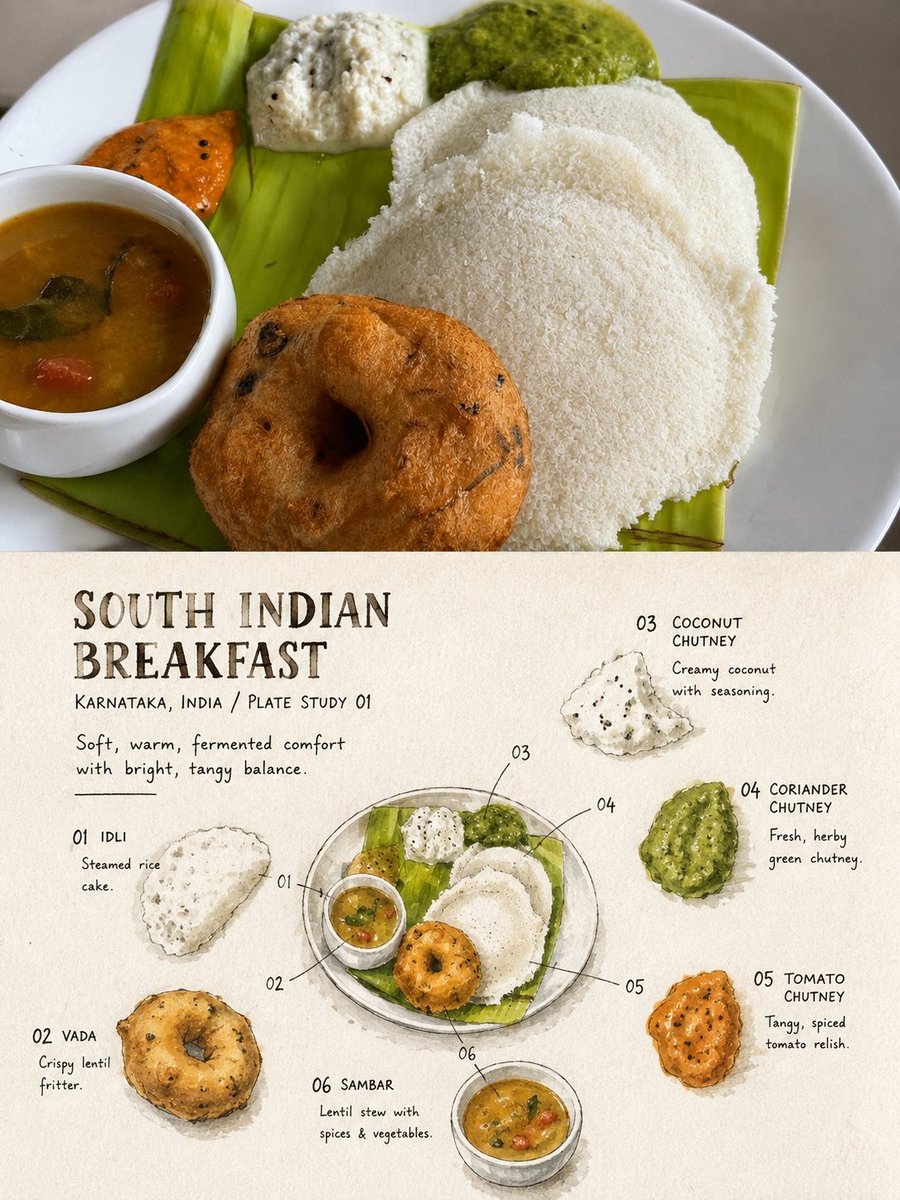
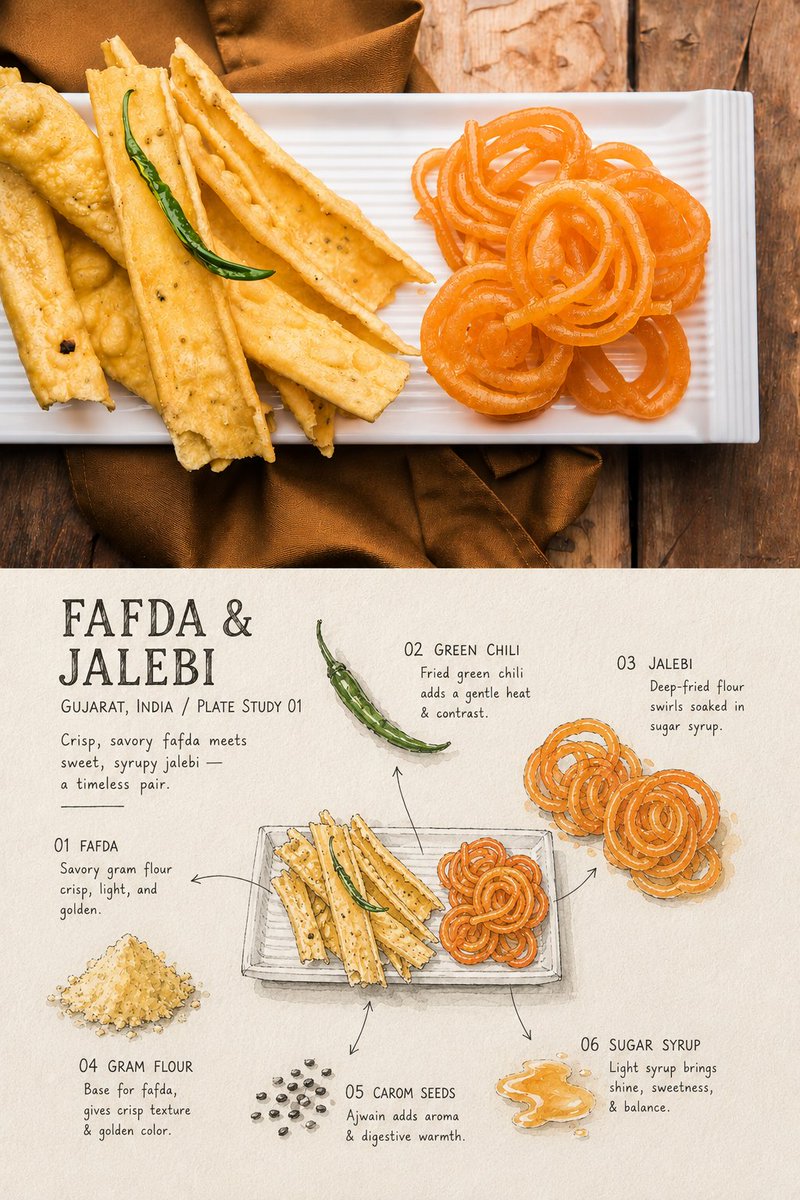
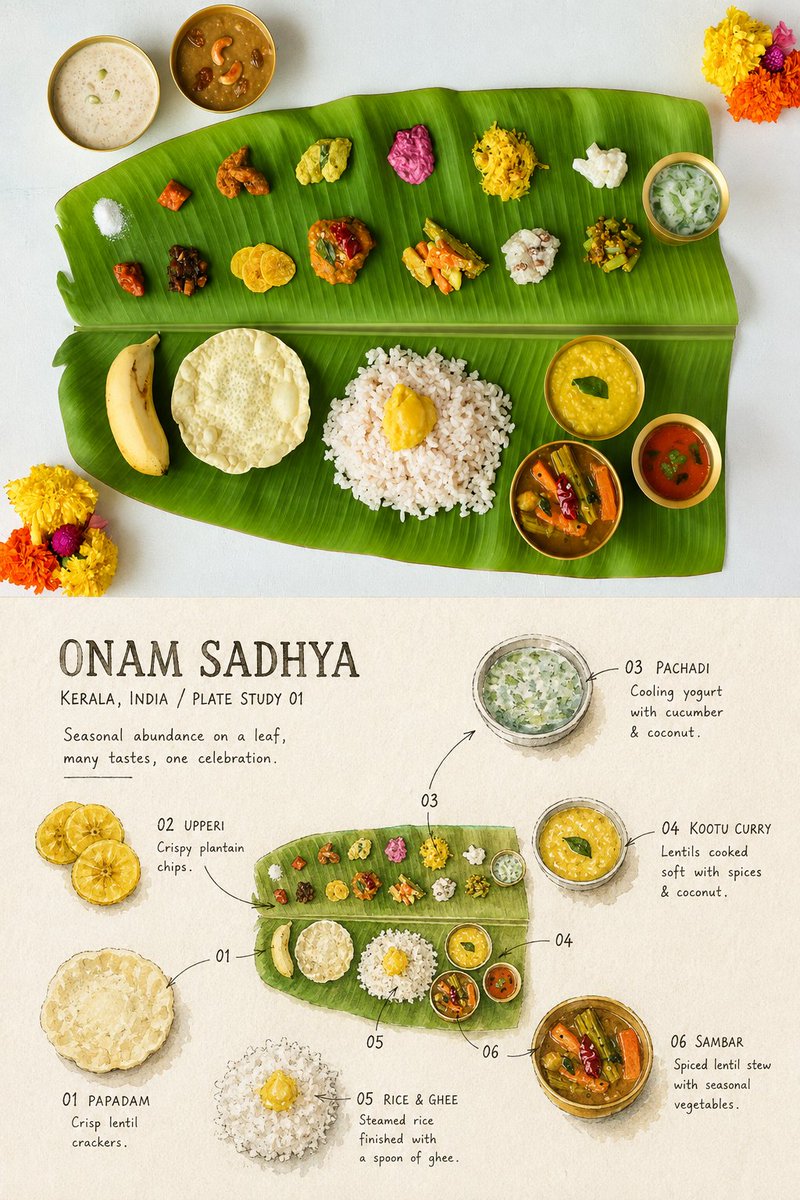
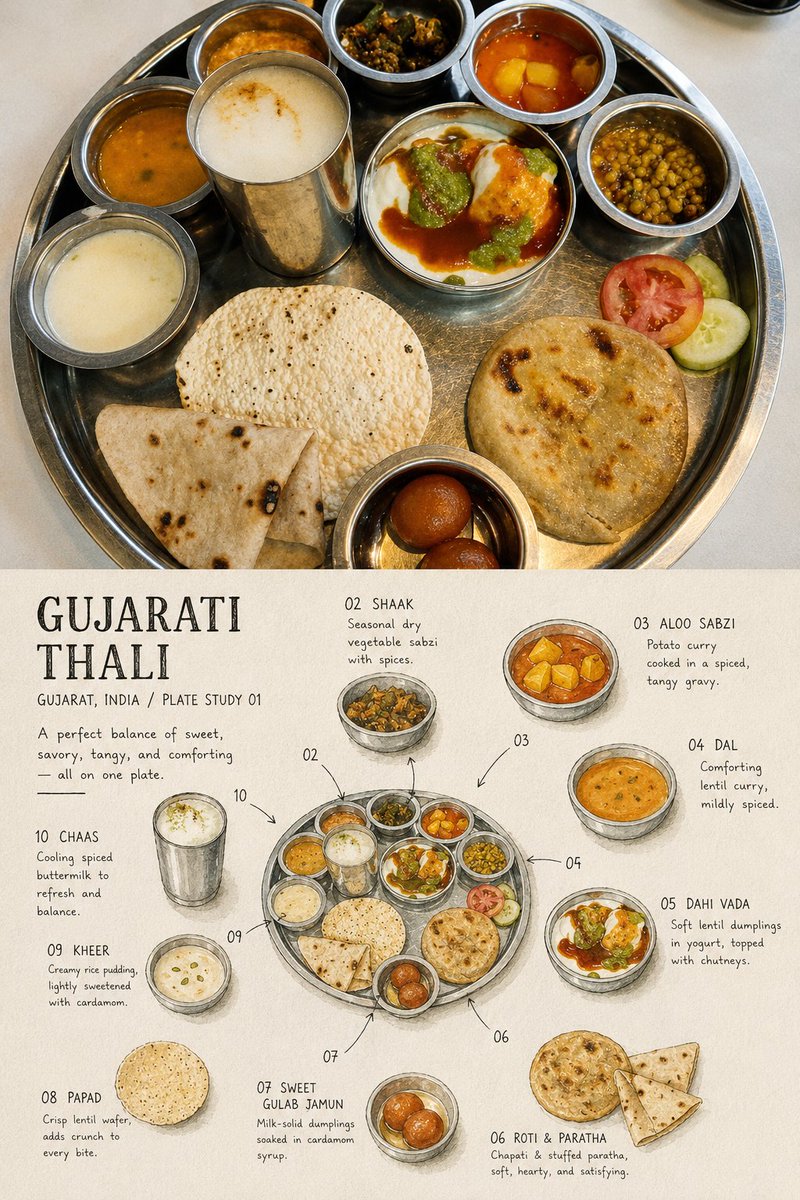
为每一张我上传的地方美食照片,制作一张独立的、高端的"食材观察旅行拼盘"编辑海报。每张照片单独成稿——不要将多张照片、多份拼盘或多道菜拼合到同一张作品中。 **输入:** 一份完整独立的拼盘或碗作为清晰主体,至少包含三个可明确辨识的组成部分(主食、肉类、海鲜、蛋类、蔬菜、香草、坚果、腌渍物、酱料、装饰)。 **格式:** 3:4 竖版构图,上半部分为真实食物摄影,下半部分为食材观察手绘,形成对比。 **上半部分(画面 45%–50%):** - 忠实保留原始照片:拼盘/碗的轮廓、食材数量、摆放位置、大小关系、质地、光影、角度与色彩。 - 仅施加轻微调色(独立美食杂志/旅行编辑风格),叠加一层细微的胶片颗粒。 - 不得重新摆放、替换/移动食材、改变分量、添加装饰,也不得在照片区域进行插画化处理。可进行克制的裁切,...
原始 Prompt
Create a standalone high-end "Ingredient Observation Travel Platter" editorial poster for each local cuisine photo I upload. Output each photo as a separate piece—no splicing multiple photos, platters, or dishes into one work.

**Input:** A complete single platter or bowl as the clear subject, with at least three distinctly identifiable components (staple, meat, seafood, egg, vegetables, herbs, nuts, pickled items, sauces, garnish).

**Format:** 3:4 vertical composition, contrasting real food photography (top) with an ingredient observation sketch (bottom).

**Upper half (45%–50% of frame):**

- Faithfully retain the original photo: platter/bowl outline, ingredient quantities, placement, size relationships, textures, lighting/shadows, angle, and colors.
- Apply only subtle color grading (independent food-magazine/travel-editorial style) plus a thin film grain layer.
- Do not rearrange plating, replace/move ingredients, alter portions, add decoration, or illustrate the photo area. Restrained cropping is allowed; the full platter must stay clearly discernible.

**Boundary:** A straight, clear, restrained horizontal line between sections, with an optional narrow warm paper spacer strip. No gradients, feathering, or ingredients crossing the line.

**Lower half (50%–55% of frame):** Warm off-white/ivory drawing paper with visible fiber, grain, faint smudges, irregular surface. Do not redraw the full dish from the same top-down composition—instead:

1. Select 3–6 real, identifiable components from the photo.
2. Draw a highly abstracted but recognizable miniature of the full platter, centered or slightly lower.
3. Miniature occupies roughly 28%–40% of the lower half's width.
4. Render selected ingredients separately as standalone watercolor swatches, cross-sections, leaves, grain clusters, sauce blocks, or structural sketches.
5. Vary scale/orientation for a sparse, asymmetrical arrangement around the miniature.
6. Use fine, slightly hesitant black ink lines, arrows, and numbers linking samples to their position on the platter.
7. Leave 35%–50% continuous off-white space—don't crowd the page.

**Material language (lower half):** matte opaque gouache, restrained black ink contours, dry brush gaps, uneven pigment coverage, visible paper grain, imperfect hand-painted edges, subtle pencil construction marks, handmade culinary field-notebook feel. Shapes stay abstracted but retain true colors, outlines, cross-sections, and grain structure—no realism, no cartoon icons.

**Color:** Extract 4–6 low-to-medium saturation true tones from the photo. Background off-white/warm gray/pale photo-related shade. One warm accent (sauce, yolk, chili, fruit) as focal point. No neon or high-saturation commercial palettes.

**Text (determined strictly from photo facts):**

- Dish title, 1–3 English words
- Location/observation number, e.g., **"INDIA / PLATE STUDY 01"**
- A 5–12 word sensory/ingredient observation
- 3–6 short numbered labels, e.g., **"01 RICE" "02 DAL" "03 PICKLE"**

If an ingredient can't be reliably identified, don't invent names—default to: "RICE," "NOODLES," "GREENS," "SAUCE," "GRILLED ITEM," "PICKLED ITEM."

Fonts: narrow handwritten recipe script, old recipe letterpress, or gentle humanist sans-serif, in warm black/deep gray-brown/dark photo tone, with slight ink breaks and paper-tooth imperfections. Title must be clearly readable at preview size; labels can be smaller but never decorative fine lines. Text clusters like handwritten notes, not slick digital overlay.

**Mood:** A traveler disassembling and recording a dish after tasting it—restrained, warm, clear, handmade, evoking flavor memory and travel archive.

**Avoid:** incomplete/multi-dish photos, platter collages, restaurants/chefs as subject, invented ingredients, added garnish, full-scale redrawing, realistic menu illustration, dense infographics, cartoon food, vector icons, plastic 3D food, full-bleed backgrounds, excess text, prices, brands, logos, signatures, dates, QR codes, URLs, social UI, garbled text, fake characters, watermarks.