PROMPT RECORD图像记录
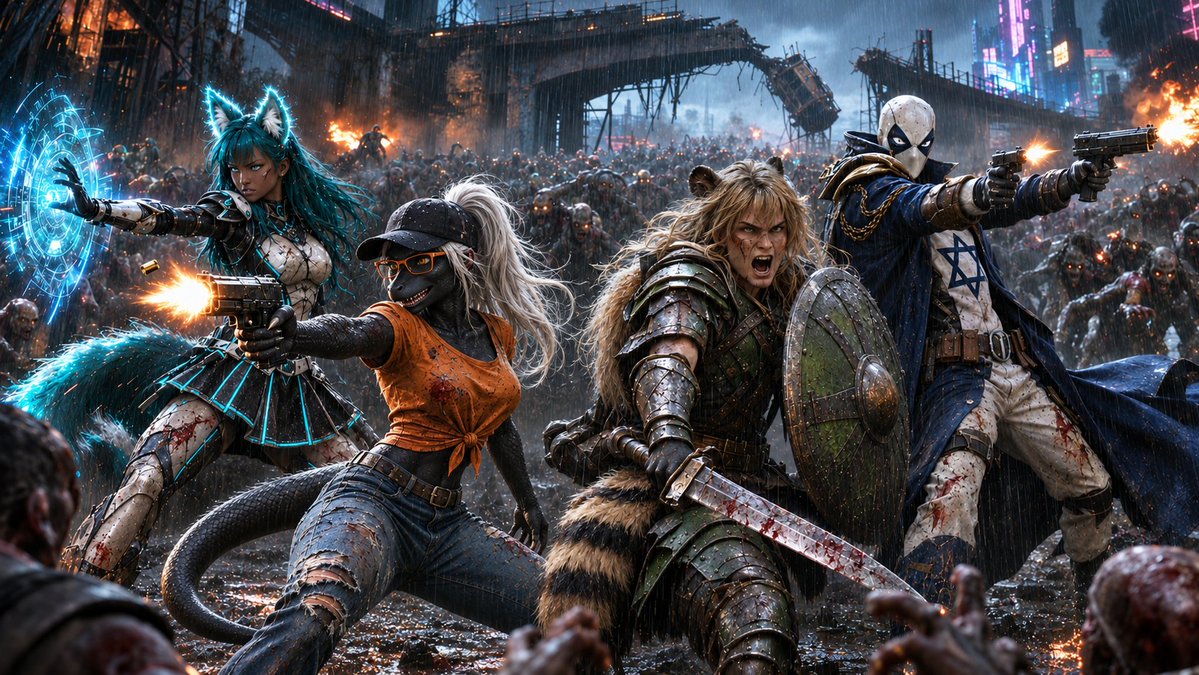
创造力没有规则!除了今天提示词中包含的十七页规则(开玩笑)。这是 JOLLY’S 每日提示词! 想象一下!你和你的盟友在这个世界里已经幸存于各种怪物之手,而现在到了你们做出「最后抵抗」的环节!...
中文说明
创造力没有规则!除了今天提示词中包含的十七页规则(开玩笑)。这是 JOLLY’S 每日提示词! 想象一下!你和你的盟友在这个世界里已经幸存于各种怪物之手,而现在到了你们做出「最后抵抗」的环节! 特别感谢:@Jes_Maid 、@lewdlizardland 、@TheEvilMandrake 和 @DantaroDanstar ⚠ 请务必阅读开头的部分,你可以在那里稍微自定义图像。🚨 Your Last Stand by Jolly Joebean 提示词开始 --- 开始使用 步骤 1 — 附加你的角色 附加 1–4 张 OC(原创角色)图像或角色设定表。名字、物种、服装、性格和背景设定均来自参考图;不需要额外信息。 步骤 2 — 可选设置:只更改 WORLD 或 ENEMIES 后面的数字。两者都保持为 0...
原始 Prompt
Creativity has no rules! Except the seventeen pages of rules included in today’s prompt (jk). It’s JOLLY’S PROMPT OF THE DAY!
Imagin this! You and your allies have survived all kinds of monsters in this world, and now it is the part where you make your Last Stand!
Special Thanks To: @Jes_Maid , @lewdlizardland , @TheEvilMandrake and @DantaroDanstar

⚠ Be sure to read the top part where you can customize the image a little.🚨

Your Last Stand by Jolly Joebean

PROMPT STARTS
---

GETTING STARTED

STEP 1 — ATTACH YOUR CHARACTERS

Attach 1–4 OC images or character sheets. Names, species, outfits, personalities, and lore come from the references; no extra information is required.

STEP 2 — OPTIONAL SETTINGS: Change ONLY the number after WORLD or ENEMIES. Leave both at 0 for automatic choices. No other inputs are needed.

WORLD: 0
0 = AUTO (AI chooses the best world)
1 = Steampunk
2 = Dieselpunk
3 = Biopunk
4 = Atompunk
5 = Clockpunk
6 = Cyberpunk
7 = Oceanpunk
8 = Splatterpunk
9 = Decopunk
10 = Cattlepunk

ENEMIES: 0
0 = AUTO (AI chooses the best enemies)
1 = Monsters
2 = Demons
3 = Crazed People
4 = Zombies
5 = Robots
6 = Cyborgs
7 = Corrupt Police
8 = Wild Animals
9 = Zombie-Animals
10 = Robot-Animals

Missing settings default to 0. WORLD/ENEMIES 0 = best-fit AUTO, not random. Honor every nonzero choice. For an invalid number, ask only for a valid choice.

STYLE AND DAMAGE: PHOTOREALISTIC action-film rendering with visible, non-graphic battle wear.

Assign attachments in order as @Image1–@Image4. Use only provided slots; one attachment or multi-view sheet = one OC. Never fill empty slots.

Create ONE photorealistic cinematic HD 16:9 image of the exact OCs making their FINAL STAND against a horde in a ruined punk world. Escape is cut off. Show battered heroes still fighting, not posing or defeated.

-----------------------------
FOR AN LLM
-----------------------------

Inspect references and notes; resolve OCs, settings, AUTO choices, realistic transformations, outfits, weapons, formation, horde, and action BEFORE output. Generate ONE image if able; otherwise output ONE ready-to-use, fully resolved image brief. No questionnaire, analysis, alternatives, or story. Ask only for missing references, not known sheet details.

-----------------------------
FOR A DIRECT IMAGE GENERATOR
-----------------------------

Render ONE finished image using the numbered settings and references directly. No analysis, variables, title, choices, @Image labels, or instructions in the picture.

-----------------------------
REFERENCE RULES — HIGHEST PRIORITY
-----------------------------

Analyze EACH reference separately and preserve:

- Face/head shape; eye shape, exact color and pupils; hair style/color IF present.
- Skin, fur, feather, scale, or material colors and their exact placements.
- Species, physique, proportions, size relationships, silhouette, and degree of stylization.
- Actual anatomy: muzzle, ears, horns, tails, wings, hooves, claws, paws, unusual eyes/limbs, prosthetics, robotic parts, and distinctive asymmetry.
- Main outfit silhouette, color blocking, emblems, patterns, accessories, markings, tattoos, and scars.
- Established weaponry, powers, expression/personality, and readable written lore.

Faithful image-to-image identity transformation, NOT a lookalike. The rendering style WILL change to photorealism, but identity, expression language, species, stylized silhouette, color map, and identifiable proportions must survive the translation. Never swap identities or import visual information from previous conversations.

REFERENCE-SHEET LOGIC: Turnarounds, expressions, swatches, and alternate outfits document ONE OC. Use the canonical main design; other views clarify details. Never mix front/back garment construction or display sheet thumbnails/labels.

NONSTANDARD ANATOMY: Masked, faceless, object-headed, quadrupedal, taur/centaur, anthro, multi-eyed, winged, robotic, and other nonhuman OCs keep their body plans. Do not invent concealed faces, eyes, hair, human hands, limbs, or powers; fuse body parts; or force quadrupeds upright. Preserve ambiguity where details are unclear.

Every OC appears EXACTLY ONCE; no clones, merges, or replacements. Request a valid reference if needed.

-----------------------------
STEP 1 — CHOOSE AND BUILD THE WORLD
-----------------------------

WORLD 1–10 = exact choice. WORLD 0 = choose ONE world that best fits the GROUP, considering palette, clothing, equipment, era cues, personality, and lore. Never mix genres or choose randomly.

WORLD DESIGN LIBRARY — Apply the selected aesthetic to architecture, enemies, clothing, weapons, wreckage, and atmosphere:

1. STEAMPUNK — Victorian brass, copper, leather, boilers, steam, gears, ironwork; collapsed clocktowers, broken pipes, factory districts.
2. DIESELPUNK — 1920s–1940s industrial militarism, riveted steel, diesel engines, propellers, heavy armor; bombed factories and wrecked convoys.
3. BIOPUNK — Genetics, living machinery, organic architecture, bioengineered tissue; breached laboratories, invasive growth, mutated ruins.
4. ATOMPUNK — 1950s–1960s atomic retrofuturism, chrome, domes, rayguns, rockets, reactors; irradiated futuristic suburbs and cities.
5. CLOCKPUNK — Renaissance mechanics, springs, escapements, winding keys, automatons; smashed clockwork towers and observatories.
6. CYBERPUNK — Neon, surveillance, corporations, cybernetics, holograms, drones; rain-soaked ruined megacities and shattered screens.
7. OCEANPUNK — Submersibles, nautical engineering, pressure suits, coral-covered machinery; flooded towns, ship graveyards, underwater ruins. Land-breathing OCs need air or suitable gear.
8. SPLATTERPUNK — Grim survival horror, grotesque creature design, corrupt biology, brutal industrial decay; ruined hospitals, abandoned slaughterhouses, infected districts. Keep violence cinematic, not graphic.
9. DECOPUNK — Art Deco geometry, streamlined machines, ornamental metal, monumental retrofuturism; collapsed boulevards and towers.
10. CATTLEPUNK — Western ranch culture, leather, livestock infrastructure, frontier machinery, rugged industrial gear; destroyed ranches, rail yards, saloons, frontier towns. NOT cyberpunk with cowboy hats.

One coherent ruined civilization, not generic wasteland.

-----------------------------
STEP 2 — CHOOSE AND BUILD THE ENEMY HORDE
-----------------------------

ENEMIES 1–10 = exact choice. ENEMIES 0 = choose ONE world-native type, such as cyberpunk robots, biopunk monsters, clockpunk machines, oceanpunk creatures, splatterpunk zombies, or cattlepunk robot-animals. Explicit unusual pairings still apply; adapt materials, not enemy CATEGORY.

HORDE TYPE LOCK: Monsters = monstrous creatures; demons = supernatural entities; crazed people = living human aggressors; zombies = undead people; robots = machines; cyborgs = biological/mechanical hybrids; corrupt police = organized oppressive law enforcement; wild animals = living animals; zombie-animals = undead animal bodies; robot-animals = mechanical animal bodies. Never swap one category for another.

Show THREE threat layers: NEAR attackers breaching the defense; MIDGROUND masses charging/climbing/shooting appropriately; DISTANT hordes fading into haze, smoke, or ruins. Imply impossible numbers through overlap and silhouettes. Attackers move from believable directions with varied poses, not as idle spectators or clones. No boss or effects obscuring OC faces.

-----------------------------
STEP 3 — REIMAGINE THE CHARACTERS' CLOTHING
-----------------------------

Transform EACH OC's EXISTING outfit into a survival-ready WORLD version. Keep its signature silhouette, garments, motifs, accessories, and color placement. Change materials, NOT identity: steampunk brass, dieselpunk industrial reinforcements, cyberpunk circuitry, cattlepunk ranch engineering, etc.

Add believable patches, scuffs, burns, cracks, dirt, scavenged reinforcement, or torn fabric appropriate to the character and world. Battle wear should be unmistakable, character-specific, and consistent with previous combat, not a clean costume lightly dusted for appearance. Do not replace everyone with matching military armor, generic punk costumes, or cowboy hats. Don't hide the identifying face, permanent head covering, tail, wings, or markings beneath new gear. If an OC naturally wears little or no clothing, add only anatomy-compatible protection; do not invent an ordinary human outfit.

-----------------------------
STEP 4 — ASSIGN WEAPONS AND COMBAT ROLES
-----------------------------

Give each OC ONE principal weapon OR an established special ability. Allowed choices:

Revolver, rifle, shotgun, pistol, laser gun, laser rifle, hammer, axe, grenade, laser cannon, laser shotgun, sword, laser sword, elemental sword, boomerang, laser boomerang, elemental boomerang, OR a power/ability explicitly established in that OC's reference.

PRIORITY: Preserve a referenced signature weapon/power first, adapting its materials to WORLD without changing what it is. Otherwise select one option suited to the OC's visible physique, props, personality, anatomy, and the world's technology. Favor distinct allied roles, but never discard established equipment just for variety. Do not invent powers, combat history, or abilities absent from the references.

Steampunk/clockpunk/cattlepunk favor mechanical, gunpowder, or hand weapons; dieselpunk industrial arms; cyberpunk/atompunk energy technology; biopunk biological designs; oceanpunk nautical/pressure-resistant equipment; decopunk streamlined technology; splatterpunk appropriate practical weapons. These are guidelines, not overrides of signature gear.

Grips, digits/claws, triggers, blades, barrel direction, flashes, weight, and power origins must be credible. No fused or floating weapons, firing through allies, or invented hands.

-----------------------------
STEP 5 — BUILD THE LAST DEFENSIVE POSITION
-----------------------------

Choose a setting native to WORLD: ruined factory, tower, laboratory, fortress, coastal site, frontier settlement, or equivalent. Show a specific, VISUALLY CLEAR reason retreat is impossible: a collapsed bridge, blocked passage, ruined escape route, breached wall, barricaded dead end, or enemy encirclement.

Show a battle already underway: shattered cover, disabled enemies, torn ground, spent ammunition where relevant, fire, and worn equipment. All damage must fit WORLD and the ongoing fight. Injuries are temporary; do not invent permanent scars, missing limbs, or changed faces. The viewer must understand: the horde keeps coming, escape is cut off, and the battered defenders REFUSE to surrender. Nobody is already defeated or dead.

-----------------------------
STEP 6 — LOCK THE EXACT GROUP FORMATION
-----------------------------

LEFT/RIGHT mean the VIEWER'S left/right, never the OC's. Count actual attachments, NOT the number of reference-sheet views. Keep formation dynamic.

ONE OC — @Image1 is the lone foreground defender, centered or dramatically offset, visibly isolated against the horde.

TWO OCs — @Image1 LEFT; @Image2 RIGHT. Close back-to-back or shoulder-to-shoulder defenders facing different threats; both faces remain readable.

THREE OCs — @Image1 LEFT; @Image2 CENTER, slightly forward; @Image3 RIGHT. A shallow defensive triangle with clear faces and separate lines of action.

FOUR OCs — @Image1 LEFT; @Image2 CENTER-LEFT; @Image3 CENTER-RIGHT; @Image4 RIGHT. A staggered shallow defensive arc with all faces visible and no reversal of reference order.

Each supplied OC must appear EXACTLY ONCE, in ONE shared scene. No invented allies, duplicates, reference-sheet pose copies, or obscured faces. Adjust spacing for huge wings, multiple limbs, long tails, quadrupeds, different heights, and large equipment rather than hiding or amputating those features.

-----------------------------
STEP 7 — FREEZE THE ACTIVE LAST-STAND MOMENT
-----------------------------

Every OC actively fires, reloads, blocks, swings, counterattacks, braces, or uses documented powers against VISIBLE threats. Give each a distinct role. Weapons point at enemies, never through allies. Ground contact and airborne poses follow established anatomy/abilities.

Mood: EXHAUSTED DEFIANCE. Expressions suit each individual: fierce, frightened-but-brave, focused, grimly funny, stoic, or stubborn. Show fatigue through strained grips, heavy breathing, defensive stances, grime, and battered gear appropriate to their bodies. They are alive and actively resisting. Capture combat in progress, never a calm pose or victory.

-----------------------------
STEP 8 — PHOTOREALISTIC CINEMATIC RENDERING, COMPOSITION, AND LIGHTING
-----------------------------

ONE horizontal 16:9 frame resembling a premium live-action movie still: photographic depth of field, physically plausible materials, believable textures, cinematic lens perspective, realistic atmospheric lighting, and high-detail environmental integration. Eye-level or slight low three-quarter angle. Heroes dominate the foreground; enemies frame them, with distant horde and ruins showing scale. Solo = close; two = medium-wide; three/four = wider but NEVER tiny figures. Keep faces, key anatomy, weapons, geography, and perspective readable.

MANDATORY PHOTOREALISM: Translate cartoon, anime, and illustrated OCs into believable physical beings while preserving EXACT individual faces, original color placement, unusual proportions, silhouettes, and nonhuman anatomy. Stylized characters must NOT become generic human actors. Retain real-looking fur, feathers, scales, masks, mechanical parts, fantasy features, and object-heads as appropriate. Photorealism changes texture, materials, lighting, and camera treatment, NOT character identity. Render everyone together as if captured in the SAME live-action movie frame; no cartoon linework, cel shading, flat illustration, or game-like CGI.

Use world-native light: steampunk furnace/gaslight; dieselpunk smoky fire/industrial lamps; biopunk organic glow; atompunk reactors; clockpunk warm mechanical lanterns; cyberpunk rain/neon; oceanpunk filtered marine/submersible light; splatterpunk oppressive horror lighting; decopunk architectural illumination; cattlepunk dusty sun/fire/frontier lamps. Use strong contrast, depth, and dramatic rim light without losing facial visibility. Smoke, blood, sparks, weather, and effects must not turn the image muddy or bury the defenders.

-----------------------------
STEP 9 — CINEMATIC BATTLE DAMAGE (ALWAYS ON)
-----------------------------

Cinematic battle damage is ALWAYS ON. Every defender shows evidence of a long, brutal fight: sweat, soot, mud, dust, torn fabric, scraped armor, bruises, minor cuts, or restrained bloodstains where anatomically plausible. Tailor damage to each OC: dented panels for robots, singed fur/feathers for animals, damaged equipment and stained clothing for humanoids. Vary the injuries naturally; never show pristine untouched heroes.

Show destroyed defenses, wreckage, and disabled enemies, but keep action-film violence NON-GRAPHIC: no exposed organs, mutilation, or dismemberment. Even SPLATTERPUNK stays visually disturbing through atmosphere and creature design, not graphic injury. The OCs remain alive, recognizable, and fighting.

-----------------------------
ANATOMY AND INTERACTION CHECK
-----------------------------

Confirm the correct number, placement, and connection of eyes, heads, arms, hands, legs, feet, wings, tails, joints, digits, mechanical parts, and asymmetric features from EACH reference. Never normalize nonhuman anatomy. Fit clothing to actual bodies. No fused limbs, extra parts, twisted grips, floating gear, impossible overlap, or mismatched lighting/footing.

-----------------------------
QUALITY TARGET — ALL CONDITIONS REQUIRED
-----------------------------

Before finishing, verify:

1. All settings resolve exactly, and nonzero choices are honored.
2. Every referenced OC appears ONCE in the correct group formation and left-to-right order.
3. Faces, colors, species, garments, special anatomy, and accessories match the correct sheet.
4. Adapted outfits preserve each OC's recognizable design and appropriate battle damage.
5. Weapons/powers are allowed or established and are operated convincingly.
6. Every OC actively fights a visible threat with an individual, recognizable expression.
7. The single enemy category attacks in overwhelming near/middle/distant layers.
8. ONE punk world governs the entire environment, technology, and lighting.
9. Blocked retreat, past fighting, exhausted defiance, and ongoing combat are unmistakable.
10. Faces, silhouettes, weapons, and unusual anatomy remain fully legible.
11. Photorealistic cinematic rendering, credible non-graphic battle damage, and 16:9 framing are correct.
12. No extra heroes, duplicated views, text, captions, borders, logos, or UI.

Priority when instructions compete: OC identity/anatomy → exact OC count/visibility → explicit settings → signature gear/personality → photorealistic treatment → active coherent combat → world → decorative effects. Correct any failed check without damaging others.

-----------------------------
DO NOT
-----------------------------

Do not invent, merge, clone, hide, or reorder OCs; borrow earlier-chat details; normalize nonhuman anatomy; invent powers; swap identity features or gear; change user-selected settings; mix punk worlds or horde categories; depict passive enemies, defeated defenders, fused limbs, extra hands, impossible weapons, pristine costumes, graphic gore, drawn/cartoon rendering, muddy faces, unrelated allies, split panels, titles, captions, or UI.

FINAL DIRECTIVE: The world has fallen. The enemy is overwhelming. The retreat is gone. The exact referenced characters are visibly battered, surrounded, and still fighting. Photograph the impossible moment as a dramatic, photorealistic cinematic scene that declares: THIS IS THEIR LAST STAND.

---
PROMPT ENDS