 1/3
1/3
PROMPT RECORD图像记录
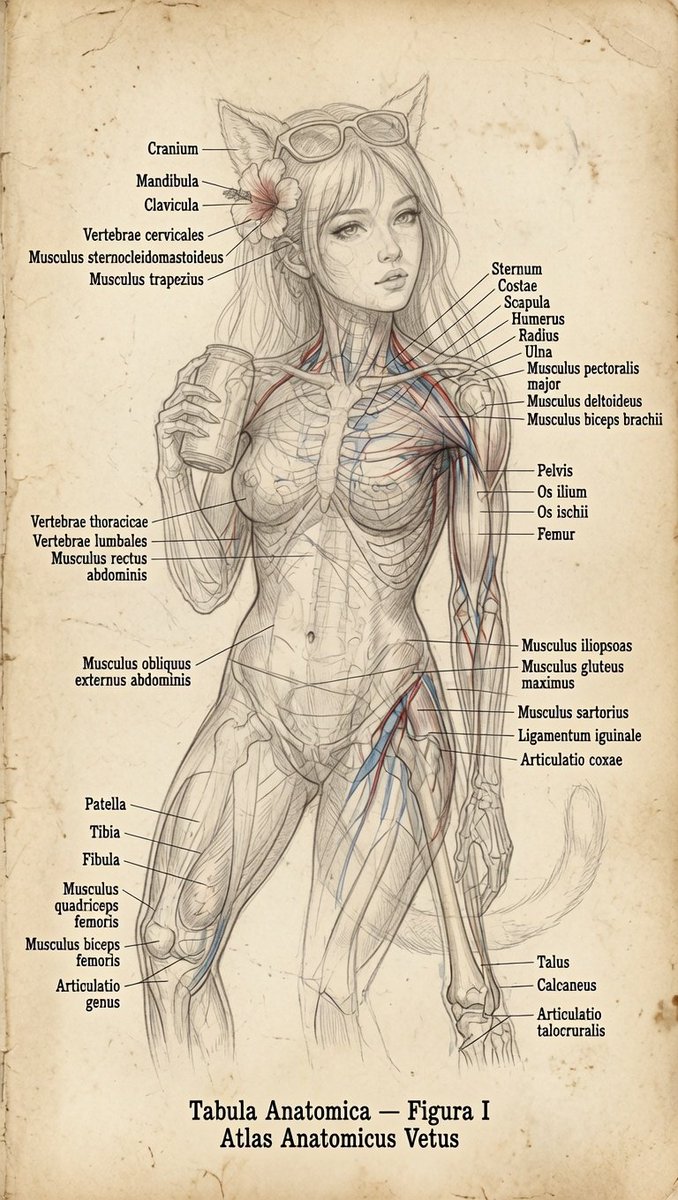
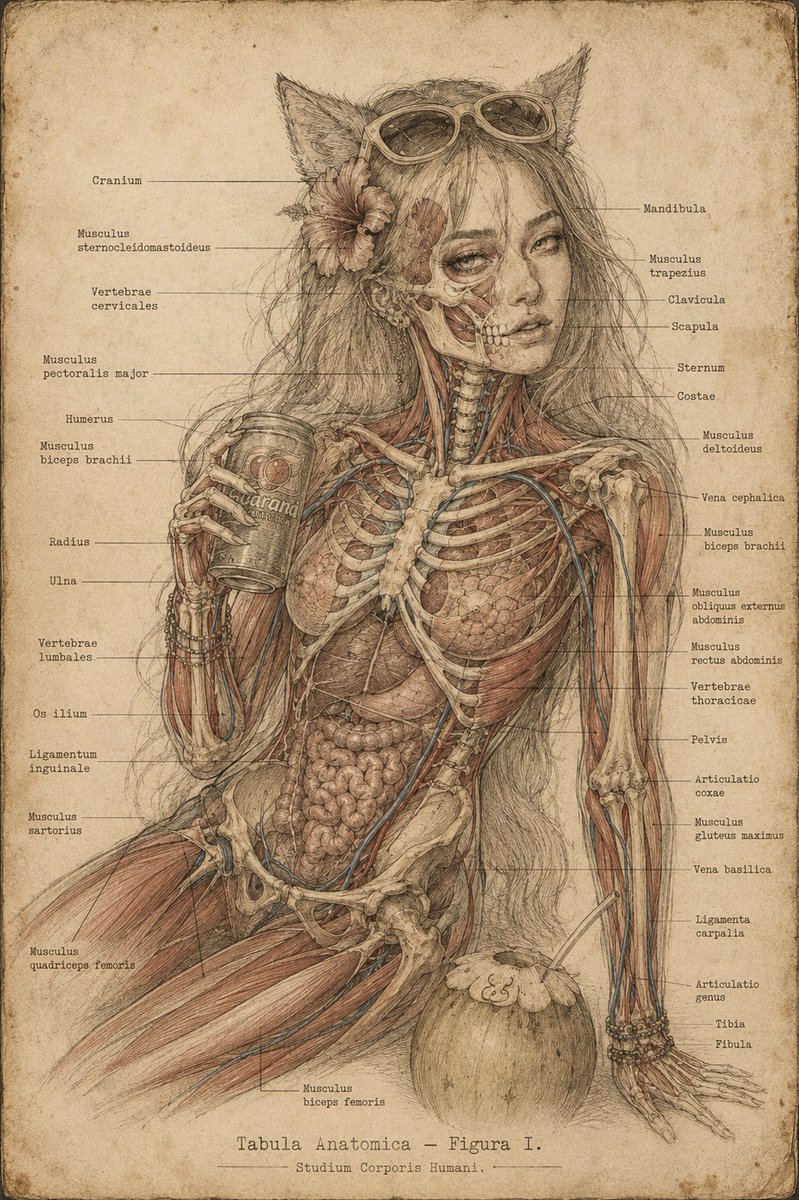
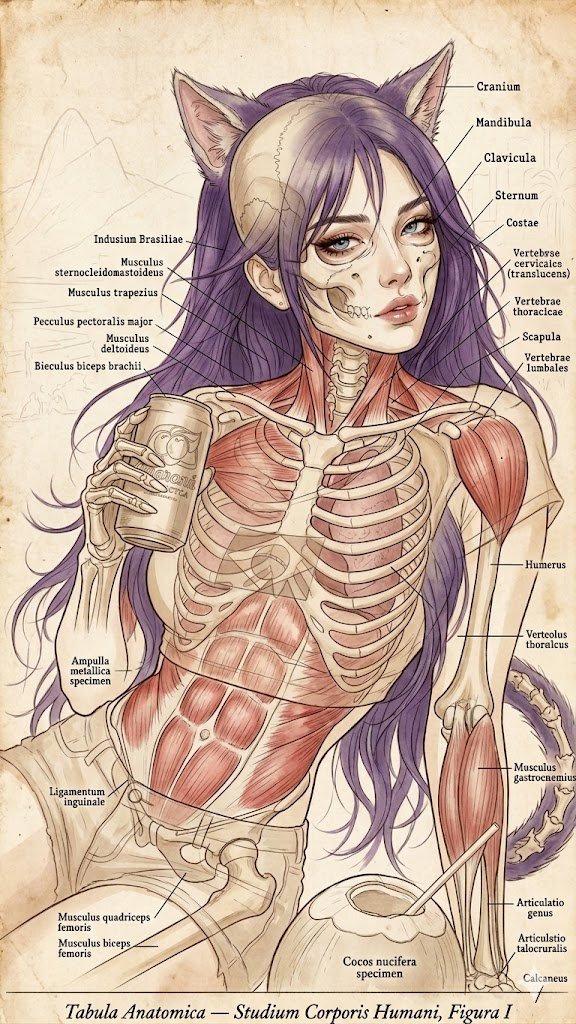
将提供的图像编辑成一张古董解剖书版画。尽可能保留原人物的姿势、拍摄角度、身体比例、轮廓、手势和整体构图,同时将主体转化为一幅精致的解剖研究插图。最终图像应看起来像印在老化象牙色纸张上的老式医学...
中文说明
将提供的图像编辑成一张古董解剖书版画。尽可能保留原人物的姿势、拍摄角度、身体比例、轮廓、手势和整体构图,同时将主体转化为一幅精致的解剖研究插图。最终图像应看起来像印在老化象牙色纸张上的老式医学解剖教科书页面,带有棕褐色污渍、细微纸纤维、磨损边缘、浅褐斑痕和档案墨水纹理。 将可见身体转换为干净的解剖草图,以教学性、不血腥、博物馆级的风格展示骨骼、浅层肌肉、肌腱、韧带和部分器官轮廓。保持解剖图的优雅和教育性,融合19世纪解剖图谱和精准现代医学插图的风格。使用细石墨线条、红蓝解剖墨水强调、柔和水彩晕染和精致影线。避免恐怖、血腥、血迹、伤口、毁损或手术暴力内容。 人物必须保持与源图像相同的姿势,包括四肢位置、躯干旋转、头部角度、视线方向、手部位置和透视变形。如果原始图像是动漫、游戏美术、插画或写实摄影,将其统一重新诠释...
原始 Prompt
Edit the provided image into an antique anatomical book plate. Preserve the original character’s pose, camera angle, body proportions, silhouette, gesture, and overall composition as closely as possible, but transform the subject into a refined anatomical study illustration. The final image should look like a vintage medical anatomy textbook page printed on aged ivory paper, with sepia stains, subtle paper fibers, worn edges, faint foxing marks, and archival ink texture.

Convert the visible body into a clean anatomical sketch that reveals bones, superficial muscles, tendons, ligaments, and selected organ silhouettes in a didactic, non-gory, museum-quality style. Keep the anatomy elegant and educational, like a 19th-century anatomical atlas mixed with precise modern medical illustration. Use thin graphite lines, red and blue anatomical ink accents, muted watercolor washes, and delicate hatching. Avoid horror, gore, blood, injury, mutilation, or surgical violence.

The figure must remain in the same pose as the source image, including limb position, torso rotation, head angle, gaze direction, hand placement, and perspective distortion. If the original image is anime, game art, illustration, or realistic photography, reinterpret it consistently as an anatomical diagram while keeping the recognizable posture and visual identity cues only as subtle external outlines. Clothing and accessories may be simplified into faint translucent contour lines so the anatomical structures remain readable.

Add anatomical labels in Latin using a vintage typewriter font, as if typed onto the page. Labels should be connected to structures with thin black leader lines. Use accurate Latin anatomical terminology, including examples such as: Cranium, Mandibula, Clavicula, Sternum, Costae, Scapula, Humerus, Radius, Ulna, Vertebrae cervicales, Vertebrae thoracicae, Vertebrae lumbales, Pelvis, Os ilium, Os ischii, Femur, Patella, Tibia, Fibula, Talus, Calcaneus, Musculus sternocleidomastoideus, Musculus trapezius, Musculus pectoralis major, Musculus deltoideus, Musculus biceps brachii, Musculus rectus abdominis, Musculus obliquus externus abdominis, Musculus iliopsoas, Musculus gluteus maximus, Musculus sartorius, Musculus quadriceps femoris, Musculus biceps femoris, Musculus gastrocnemius, Ligamentum inguinale, Articulatio coxae, Articulatio genus, Articulatio talocruralis.

Place the labels naturally around the figure, balancing readability and visual elegance. The text should look authentic, slightly imperfect, with subtle ink bleed, uneven typewriter spacing, and small alignment irregularities. Include a small archival caption at the bottom of the page, such as “Tabula Anatomica — Figura I”, “Studium Corporis Humani”, or “Atlas Anatomicus Vetus”. Do not use Japanese labels unless specifically requested; prioritize Latin anatomical nomenclature.

Lighting should be soft and flat like a scanned antique page. The final result must feel like a scholarly anatomical illustration, not a modern infographic. High detail, precise linework, aged paper texture, anatomical accuracy, elegant composition, subtle red muscle fibers, pale blue veins, ivory bone rendering, dark graphite outlines, old medical atlas atmosphere, realistic printed-page imperfections.