 1/4
1/4
PROMPT RECORD图像记录
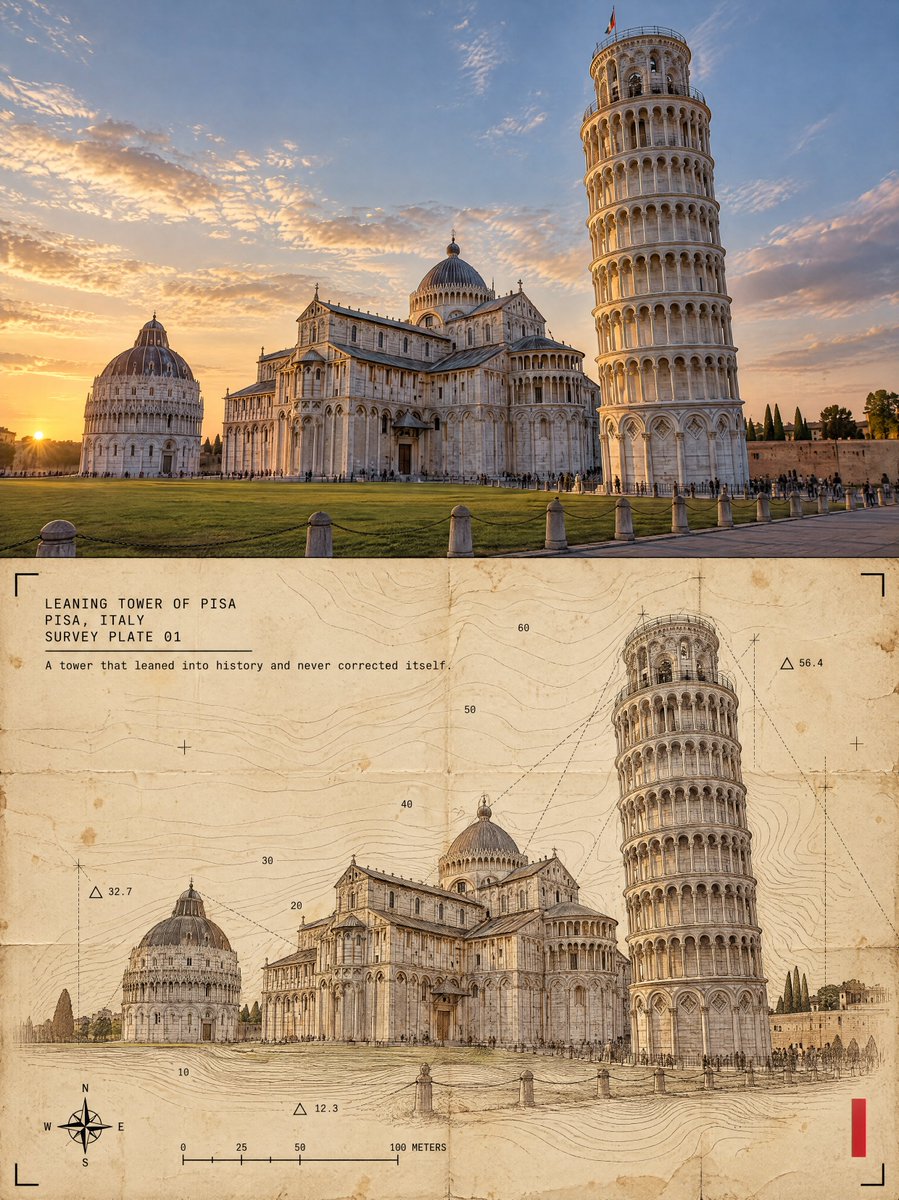
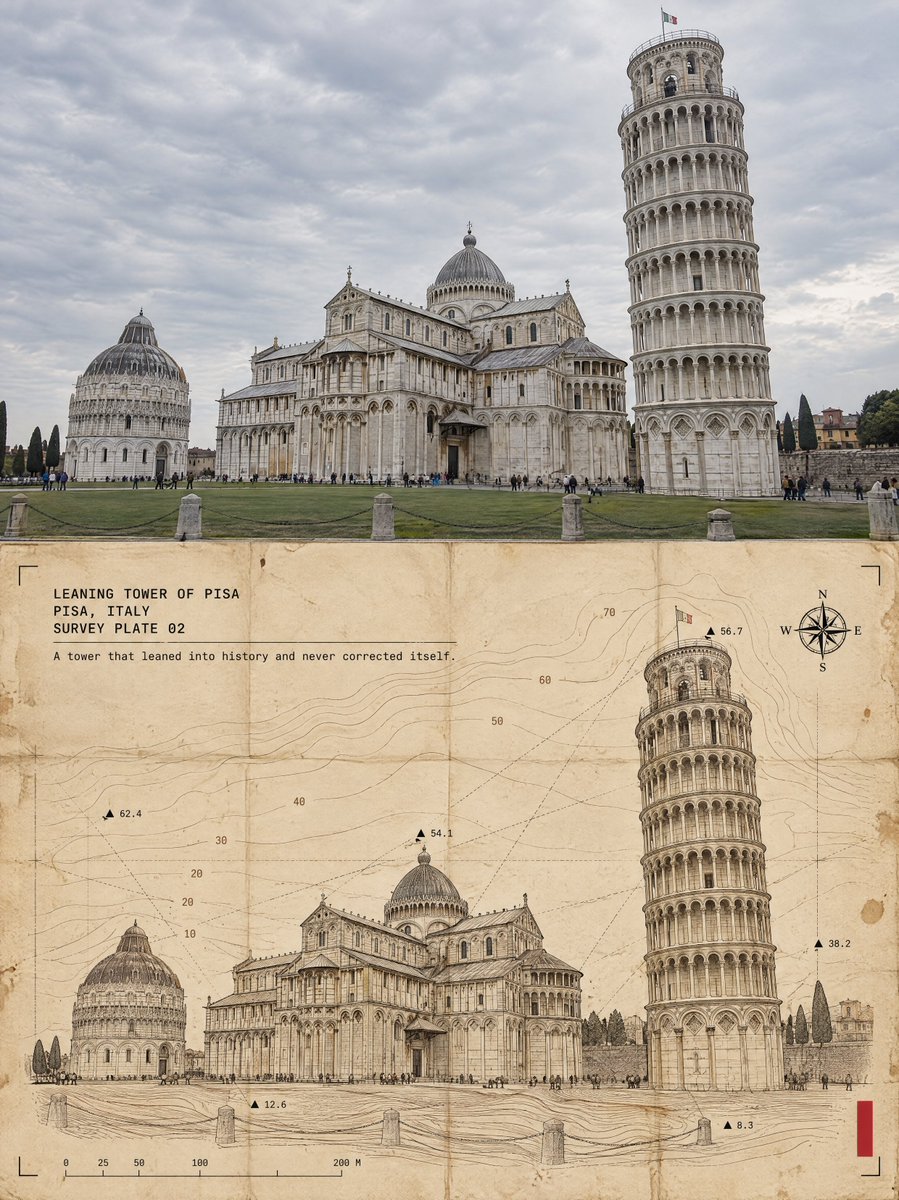
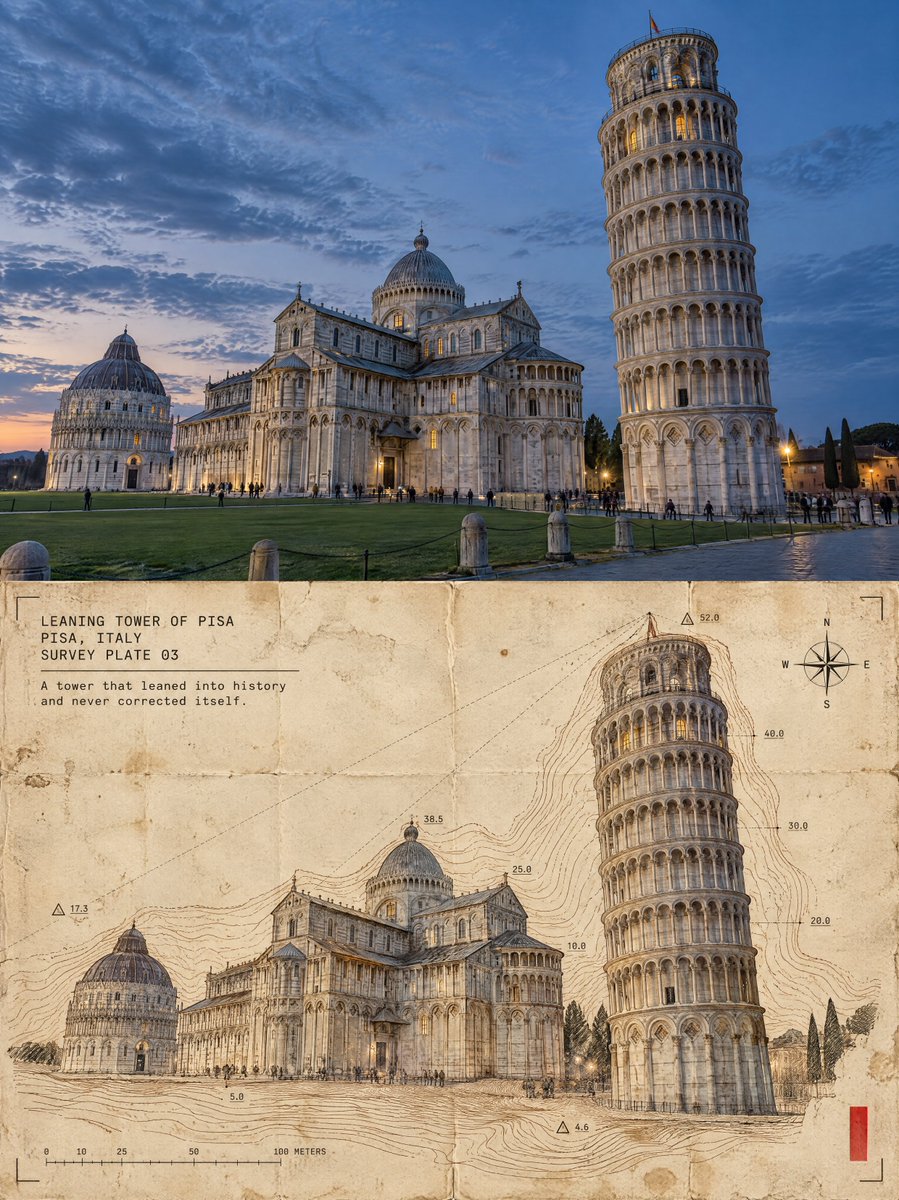
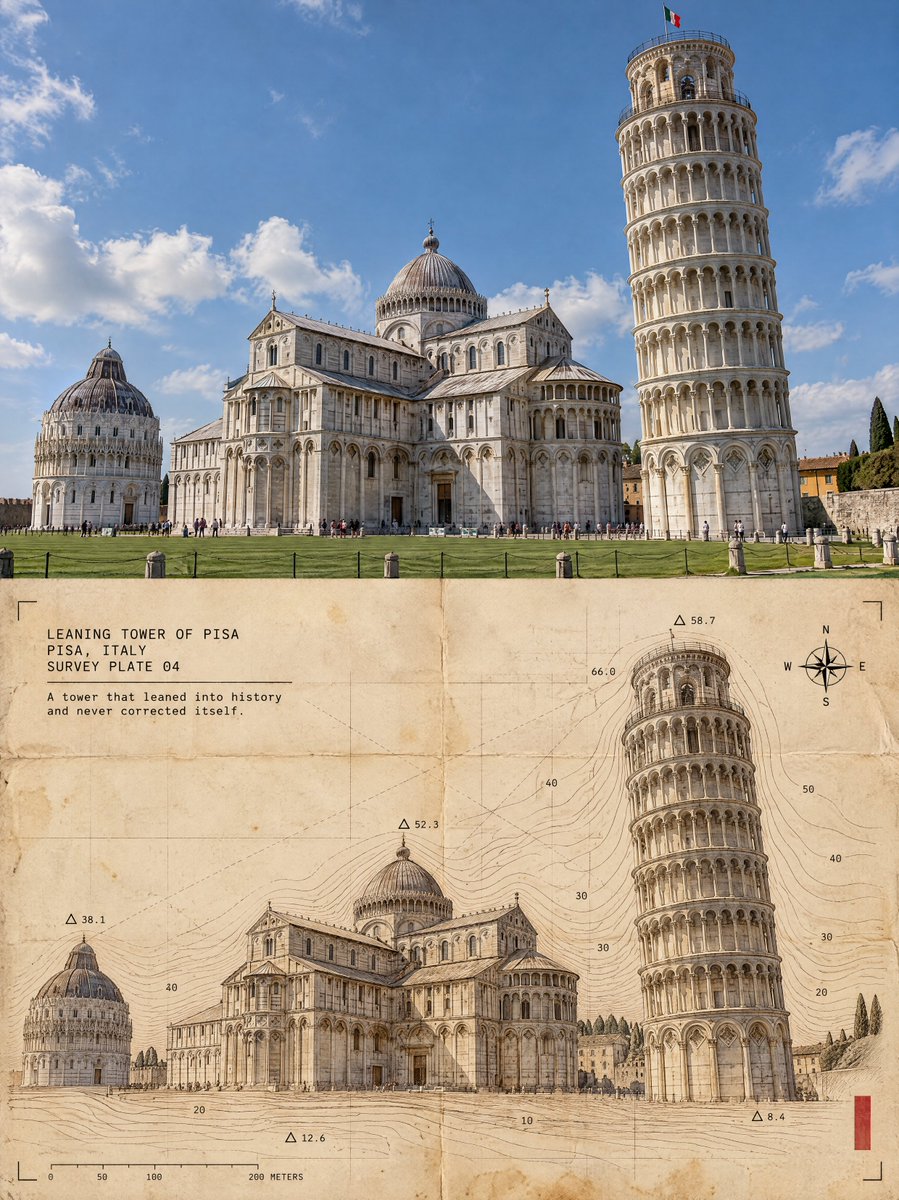
GPT Image 2.5 在 CHATGPT 上 每一座纪念碑都有一份无人见过的测绘图。 比萨斜塔,在纸面上重新测量。 四块图版,一座塔,一位测绘员。 完整主提示词见帖子 为你的城市改编它。...
中文说明
GPT Image 2.5 在 CHATGPT 上 每一座纪念碑都有一份无人见过的测绘图。 比萨斜塔,在纸面上重新测量。 四块图版,一座塔,一位测绘员。 完整主提示词见帖子 为你的城市改编它。 #AIArt #Architecture 堆栈 ───────────────────────── 模型:GPT Image 2.5 · 变体:sunburst · 质量:high · 分辨率:4K · 比例:3:4 一座建筑一张海报——绝不要把两座建筑合并到同一画面中。 如果你提供真实照片,请将其放入 TOP HALF(上半部)角色:提示词会忠实保留它。 复用方法:替换 {STRUCTURE DESCRIPTION}、{NAME}、{CITY, COUNTRY} 和 {CAPTION}。其他每一行保持不变。 主提示词...
原始 Prompt
GPT Image 2.5 on CHATGPT

Every monument has a survey nobody has seen.

The Leaning Tower of Pisa, re-measured on paper.
Four plates, one tower, one surveyor.

Full master prompt in the thread
remix it for your city.

#AIArt #Architecture
STACK
─────────────────────────
Model: GPT Image 2.5 · variant: sunburst · quality: high · resolution: 4K · aspect: 3:4

One poster per structure — never merge two structures into one frame.

If you supply a real photo, put it in the TOP HALF role: the prompt preserves it faithfully.

To reuse: replace {STRUCTURE DESCRIPTION}, {NAME}, {CITY, COUNTRY} and {CAPTION}. Keep every other line unchanged.

MASTER PROMPT
─────────────────────────
One poster, 3:4 vertical canvas. Split into two roughly equal zones — a realistic photograph on top, a printed reconstruction below — divided by one clean sharp horizontal line. The structure must not be stretched, warped, tilted or repositioned unnaturally.

TOP HALF — THE REAL SHOT
{STRUCTURE DESCRIPTION}. {PLATE LIGHT}. Preserve the structure faithfully: same architecture, proportions, perspective, distinctive details, natural light and shadow. Add only a subtle high-end color grade and the faintest film grain. Never redesign or reinterpret the architecture.

BOTTOM HALF — THE PRINTED RECONSTRUCTION
Rebuild the same structure as a mid-century surveyor's topographic map sheet: the building and its site rendered in fine brown contour lines that wrap around the mass and terrain, elevation index numbers printed along the contours, small triangular benchmark markers with elevation tags, a compass rose, a thin scale bar, faint theodolite sight-lines and the blocky vintage lettering of a USGS quadrangle sheet. The photograph dissolves outward into contour lines, survey ticks and a faint grid. The structure must remain immediately recognizable. {PLATE DENSITY}.
Texture: yellowed map paper with fiber grain, worn fold creases, faint old stains, restrained crop marks, one small red calibration bar. Color: aged-paper ground, warm brown and black survey inks, the structure's original muted colors, a single red accent. Never fully desaturate the structure.
The structure occupies roughly 60-88% of the frame width. Leave 22-38% of the paper visibly untouched and empty — generous negative space so the poster reads as an archival specimen, not a packed screen.

TYPOGRAPHY — a clean fixed-width architectural title block, pinned top-left at a small fixed inset, black ink, monospaced technical typeface, verbatim, each line in caps:
"{NAME}"
"{CITY, COUNTRY}"
"SURVEY PLATE 0N"
A thin horizontal rule under the third line, then one short observational caption verbatim:
"{CAPTION}"

A solid vertical red rectangle — the only red in the poster — is pinned to the bottom-right corner zone about 12% from the bottom and right edges. Four thin black crop marks sit in the four corners of the bottom half at identical insets. Red bar, crop marks and text block keep exactly the same position and size relative to the frame.

MOOD: field survey notebook crossed with modern travel editorial — the landmark as a place the surveyor has measured. Sophisticated, minimal, tactile, intellectual, slightly mysterious, highly collectible.

AVOID: solid black terminal backgrounds, dense walls of code, cyberpunk neon, excessive decorative glyphs, distorted architecture, impossible geometry, invented architectural details, fake technical specifications, random meaningless symbols, garbled text, extra colors, brand logos, QR codes, watermarks, author credits, tourist-poster clichés.

Priority: preserve the structure's identity and architectural accuracy first. The experimental print treatment enhances the architecture, never hides it.

THE FOUR VARIATIONS (one axis change per plate)

PLATE 01 — DENSE · light: "Golden-hour sunlight with long warm shadows" · density: "The print treatment is at its densest and richest: layered marks, full system detail"
PLATE 02 — LINEWORK · light: "Soft overcast daylight, muted flat tones" · density: "The print is linework-forward: thin drafting lines and technical geometry dominate the reconstruction"
PLATE 03 — FRAGMENT · light: "Blue-hour dusk with cool tones and lit windows glowing" · density: "The print is fragment-forward: torn photographic fragments dominate, with fewer system marks around them"
PLATE 04 — MINIMAL · light: "Bright midday sunlight with crisp shadows" · density: "The print is the minimal plate of the set: sparse marks, maximum untouched paper"