PROMPT RECORD图像记录
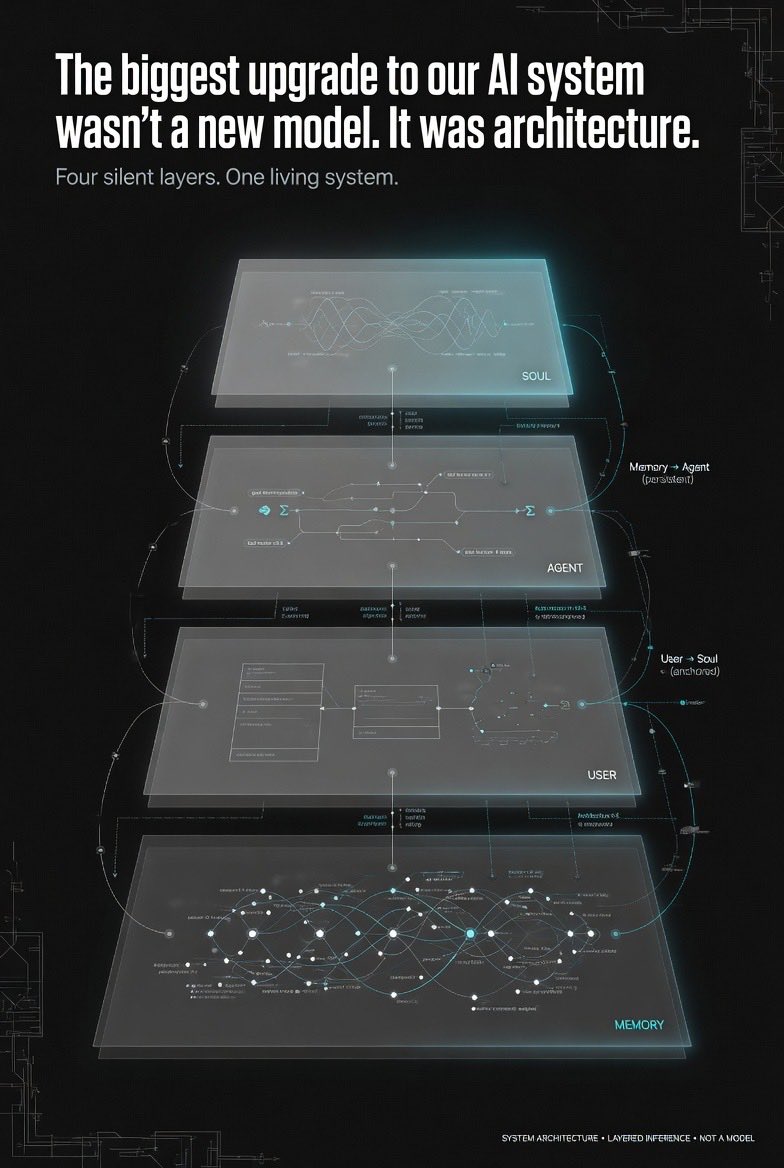
一整团指令, 一个人格, 一份记忆, 一个界面, 寄望于连贯性能自己涌现。 这很快就会崩溃。 对我们更有效的方法,是将系统按职责拆成不同层级: Soul(灵魂层):负责语气、立场与边界。 Ag...
中文说明
一整团指令, 一个人格, 一份记忆, 一个界面, 寄望于连贯性能自己涌现。 这很快就会崩溃。 对我们更有效的方法,是将系统按职责拆成不同层级: Soul(灵魂层):负责语气、立场与边界。 Agent(代理层):负责执行、验证与复盘。 User(用户层):负责目标、上下文与认知契合。 Memory(记忆层):负责超越聊天记录的连续性。 然后我们把它真正落地。 我们重写了人格层,让它只管语气,不再管操作。 我们把执行规则搬进一个独立的 agent 层。 我们把记忆做成文件,不再依赖聊天历史。 我们关掉了那些与系统提示相互掣肘的 provider 级人格。 我们在长篇阅读笔记之上,搭了一个 wiki 层,让知识真正可复用。 这一转变,改变了一切。 几条来之不易的教训: • 语气和操作不该住在同一层 • 记忆必须有文件...
原始 Prompt
one blob of instructions,
one personality,
one memory,
one interface,
one hope that coherence will somehow emerge.

That breaks fast.

What worked better for us was splitting the system into layers with different jobs:

Soul for voice, stance, and boundaries.
Agent for execution, verification, and review.
User for goals, context, and cognitive fit.
Memory for continuity beyond chat history.

Then we made it real.

We rewrote the personality layer so it handled voice, not operations.
We moved execution rules into a separate agent layer.
We turned memory into files instead of relying on chat history.
We disabled provider-level personality that was fighting the system prompt.
We built a wiki layer on top of long reading notes so knowledge became reusable.

That single shift changed everything.

A few hard lessons:

• voice and operations should not live in the same layer
• memory must be file-backed, not vibes-backed
• anti-sycophancy matters
• verification beats eloquence
• long notes are not memory
• bad architecture breaks even strong models

We stopped optimizing for an AI that sounds intelligent.

We started optimizing for one that has:
continuity,
taste,
discipline,
legibility,
and memory.

That’s the difference between a chatbot and a cognitive operating layer.

Over the next few days, I’m going to break down each layer, what changed in practice, and what actually made the system better.