PROMPT RECORD图像记录
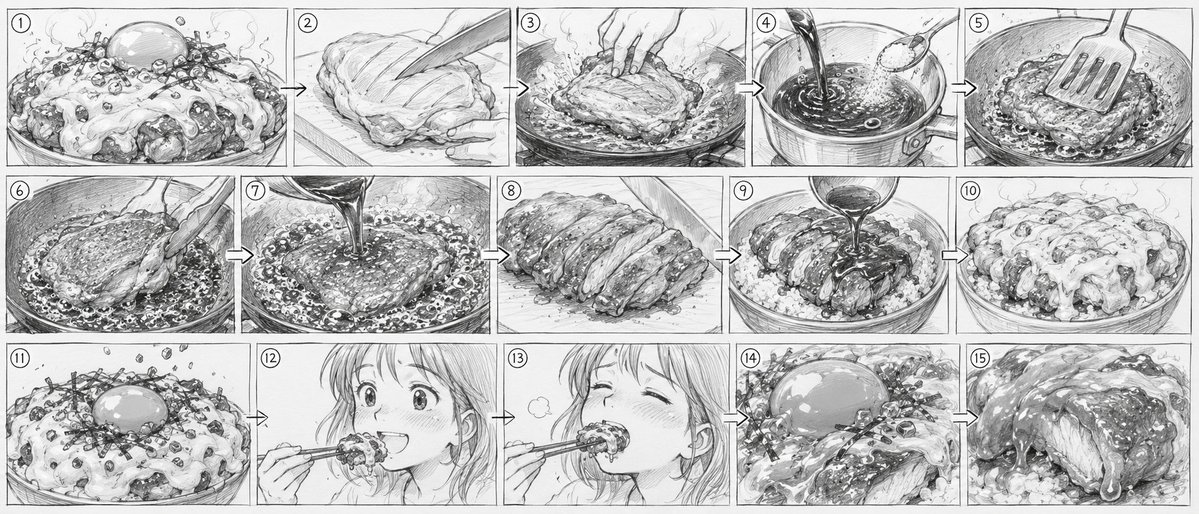
分镜提示: 为一段15秒的日本2D动画烹饪短视频创建一份超粗略的铅笔分镜。画幅比例:21:9。菜品是一份令人罪恶感爆棚的照烧鸡肉盖饭(teriyaki chicken donburi),上面有...
中文说明
分镜提示: 为一段15秒的日本2D动画烹饪短视频创建一份超粗略的铅笔分镜。画幅比例:21:9。菜品是一份令人罪恶感爆棚的照烧鸡肉盖饭(teriyaki chicken donburi),上面有融化的芝士和一颗光泽诱人的蛋黄。视频应感觉节奏很快、剪辑很多,但每个烹饪动作必须清晰易读。这不是成品插画,把它想象成粗略手绘的缩略图分镜。只使用粗略的铅笔线条、简单的分格、简单的表示动作的箭头,以及简单的镜头构图。不要颜色、不要干净线条、不要完成的背景。分镜面板序列:极特写强钩镜——完成的照烧鸡肉盖饭,蒸汽升起,展示光泽的酱汁、融化的芝士和颤动的蛋黄。特写——用菜刀在带皮生鸡腿肉上浅浅划出纹路。鸡皮朝下放入热煎锅,油花四溅。镜头给到小奶锅——酱油、味醂和糖混合在一起,变成浓稠有光泽的https://t.co/TgaCy4K...
原始 Prompt
prompt of storyboard:
Create a super-rough pencil storyboard for a 15-second Japanese 2D animation cooking short video. Aspect ratio: 21:9.The dish is a guilty-pleasure teriyaki chicken donburi. It has melted cheese on top and a glossy egg yolk. The video should feel fast-paced with many cuts, but each cooking action must be clear and readable. This is not a finished illustration. Think of it like rough hand-drawn thumbnail storyboards. Use only rough pencil lines, simple panel divisions, simple arrows showing motion, and simple camera compositions. No colors, no clean line art, no finished backgrounds.Storyboard panel sequence:Extreme close-up of a strong hook. The finished teriyaki chicken donburi. Steam rises, showcasing glossy sauce, melted cheese, and a quivering egg yolk.Close-up of raw chicken thigh skin being scored with shallow cuts from a kitchen knife.Chicken placed skin-side down into a hot frying pan, oil splattering.Shot of a small saucepan. Soy sauce, mirin, and sugar are mixed together, becoming a thick, glossy https://t.co/TgaCy4Kvsv the frying pan, the chicken skin browns. A spatula presses down gently, oil bubbling.The chicken is flipped over, revealing golden crispy skin and glistening meat juices.Teriyaki sauce is poured into the frying pan. Thick, foamy bubbles envelop the chicken.The cooked chicken is sliced with a kitchen knife, revealing a juicy cross-section.Sliced chicken is placed over steaming white rice in a donburi bowl, and sauce is poured over.Cheese melts over the hot chicken. An egg yolk is placed in the center, and chopped nori (seaweed) and scallions are sprinkled on top.A Japanese 2D-anime-style character appears only at the very end, picking up a bite with chopsticks.The character takes one bite and shows a deeply blissful expression, ending with a super-close-up of the glossy donburi.Use cinematic close-ups, top-down shots, hand close-ups, frying pan close-ups, and macro cooking compositions. Use only rough pencil lines to emphasize steam, oil splatter, sauce gloss, meat juices, crispy skin texture, fluffy rice, melted cheese, and the action of the egg yolk.Prohibited: legible text, titles, subtitles, logos, watermarks, title cards. No photorealistic, 3D CGI, or game-style visuals. No clean finished illustrations, colors, or detailed backgrounds. The cooking is the main character; the character is a supporting role.s:Please convert the reference rough pencil-storyboard into a high-quality, fully animated 15-second Japanese 2D animation cooking video.The star of the video is a guilt-inducing teriyaki chicken donburi, topped with melted, stretchy cheese and a glossy, tempting egg yolk.Use a fast-paced edit with quick cuts. However, do not make the cooking actions feel rushed, and do not use fast-forward, timelapse, or chaotic motion. This is not high-speed cooking, speed-cooking, or timelapse cooking. Animate every action carefully and make it easy to follow. The only "fast" part should be the cuts between shots; the cooking actions themselves must remain clear and readable.Shot Flow:Begin with a close-up of the nearly finished donburi. Show glossy teriyaki chicken, rising steam, soft and stretchy melted cheese, a quivering golden egg yolk, and sauce glistening under warm kitchen lighting.Cut to a close-up of raw chicken thigh skin being scored with shallow cuts from a kitchen knife. Show the elasticity of the meat and the subtle sheen of its fat.Cut to the chicken being placed skin-side down into a hot frying pan. Convey a sharp, sizzling impact sound, tiny droplets of oil splattering, and the air warping from the heat.Cut to soy sauce, mirin, and sugar being poured into a small saucepan, swirling and blending together into a rich amber-colored sauce.Cut to the chicken skin slowly browning in the pan, a spatula pressing down gently, and oil bubbles forming and rising around it.Flip the chicken to reveal crisp, golden-brown skin and shimmering meat juices.Pour the rich teriyaki sauce into the frying pan. Show the sauce bubbling, boiling down, and coating the chicken in a lacquer-like, glossy shine.Cut to the cooked chicken being neatly sliced. Show the crispy skin, tender meat, and juicy cross-section.Arrange the sliced chicken over steaming white rice in a donburi bowl, and drizzle with glossy sauce, letting it soak into the rice.Use the residual heat to melt the cheese, place a bright egg yolk in the center, and have chopped nori and scallions gently fall over the top.Near the end, briefly show a Japanese 2D-anime-style character picking up the perfect bite with chopsticks—a mouthful that includes chicken, rice, yolk, cheese, and sauce.The character takes the bite. No dialogue—just show a warm, deeply satisfied expression.End on a super-close-up of the donburi as the yolk breaks and mingles with the glossy sauce, steam rises, and cheese stretches.Visual Style: High-quality Japanese 2D animation, hand-drawn feel, expressive food animation, warm lighting, crisp lines, rich and natural colors, cinematic macro close-ups, dynamic shot transitions, and strong texture rendering. The cooking is the main character. The human character appears only to reinforce the final moment of satisfaction.Emphasize ASMR-style visual storytelling that conveys sensation even without music. The sounds of knife cutting, oil frying, sauce bubbling, meat juices, crispy skin, sauce-pouring motion, steam, fluffy rice, melting cheese, the yolk breaking, and the chopsticks lifting a bite—all should be felt through the visuals alone. Make this video satisfying with no BGM, no narration, and no dialogue.Strict Prohibitions: No live-action. No photorealistic rendering. No 3D CGI. No game-style rendering. No real-camera-lens aesthetics. No text. No explanatory captions. No subtitles. No title cards. No logos. No watermarks. No signage. No legible text of any kind. No narration. No dialogue. No BGM. Do not let the character stand out too much. In every shot, keep the cooking process clear, appetizing, and easy to understand.
Create a super-rough pencil storyboard for a 15-second Japanese 2D animation cooking short video. Aspect ratio: 21:9.
The dish is a guilty-pleasure teriyaki chicken donburi. It has melted cheese on top and a glossy egg yolk. The video should feel fast-paced with many cuts, but each cooking action must be clear and readable. This is not a finished illustration. Think of it like rough hand-drawn thumbnail storyboards. Use only rough pencil lines, simple panel divisions, simple arrows showing motion, and simple camera compositions. No colors, no clean line art, no finished backgrounds.
Storyboard panel sequence:

Extreme close-up of a strong hook. The finished teriyaki chicken donburi. Steam rises, showcasing glossy sauce, melted cheese, and a quivering egg yolk.

Close-up of raw chicken thigh skin being scored with shallow cuts from a kitchen knife.

Chicken placed skin-side down into a hot frying pan, oil splattering.

Shot of a small saucepan. Soy sauce, mirin, and sugar are mixed together, becoming a thick, glossy sauce.

In the frying pan, the chicken skin browns. A spatula presses down gently, oil bubbling.

The chicken is flipped over, revealing golden crispy skin and glistening meat juices.

Teriyaki sauce is poured into the frying pan. Thick, foamy bubbles envelop the chicken.

The cooked chicken is sliced with a kitchen knife, revealing a juicy cross-section.

Sliced chicken is placed over steaming white rice in a donburi bowl, and sauce is poured over.

Cheese melts over the hot chicken. An egg yolk is placed in the center, and chopped nori (seaweed) and scallions are sprinkled on top.

A Japanese 2D-anime-style character appears only at the very end, picking up a bite with chopsticks.

The character takes one bite and shows a deeply blissful expression, ending with a super-close-up of the glossy donburi.

Use cinematic close-ups, top-down shots, hand close-ups, frying pan close-ups, and macro cooking compositions. Use only rough pencil lines to emphasize steam, oil splatter, sauce gloss, meat juices, crispy skin texture, fluffy rice, melted cheese, and the action of the egg yolk.
Prohibited: legible text, titles, subtitles, logos, watermarks, title cards. No photorealistic, 3D CGI, or game-style visuals. No clean finished illustrations, colors, or detailed backgrounds. The cooking is the main character; the character is a supporting role.

prompt on seedance 2.0:
Please convert the reference rough pencil-storyboard into a high-quality, fully animated 15-second Japanese 2D animation cooking video.
The star of the video is a guilt-inducing teriyaki chicken donburi, topped with melted, stretchy cheese and a glossy, tempting egg yolk.
Use a fast-paced edit with quick cuts. However, do not make the cooking actions feel rushed, and do not use fast-forward, timelapse, or chaotic motion. This is not high-speed cooking, speed-cooking, or timelapse cooking. Animate every action carefully and make it easy to follow. The only "fast" part should be the cuts between shots; the cooking actions themselves must remain clear and readable.
Shot Flow:

Begin with a close-up of the nearly finished donburi. Show glossy teriyaki chicken, rising steam, soft and stretchy melted cheese, a quivering golden egg yolk, and sauce glistening under warm kitchen lighting.

Cut to a close-up of raw chicken thigh skin being scored with shallow cuts from a kitchen knife. Show the elasticity of the meat and the subtle sheen of its fat.

Cut to the chicken being placed skin-side down into a hot frying pan. Convey a sharp, sizzling impact sound, tiny droplets of oil splattering, and the air warping from the heat.

Cut to soy sauce, mirin, and sugar being poured into a small saucepan, swirling and blending together into a rich amber-colored sauce.

Cut to the chicken skin slowly browning in the pan, a spatula pressing down gently, and oil bubbles forming and rising around it.

Flip the chicken to reveal crisp, golden-brown skin and shimmering meat juices.

Pour the rich teriyaki sauce into the frying pan. Show the sauce bubbling, boiling down, and coating the chicken in a lacquer-like, glossy shine.

Cut to the cooked chicken being neatly sliced. Show the crispy skin, tender meat, and juicy cross-section.

Arrange the sliced chicken over steaming white rice in a donburi bowl, and drizzle with glossy sauce, letting it soak into the rice.

Use the residual heat to melt the cheese, place a bright egg yolk in the center, and have chopped nori and scallions gently fall over the top.

Near the end, briefly show a Japanese 2D-anime-style character picking up the perfect bite with chopsticks—a mouthful that includes chicken, rice, yolk, cheese, and sauce.

The character takes the bite. No dialogue—just show a warm, deeply satisfied expression.

End on a super-close-up of the donburi as the yolk breaks and mingles with the glossy sauce, steam rises, and cheese stretches.

Visual Style: High-quality Japanese 2D animation, hand-drawn feel, expressive food animation, warm lighting, crisp lines, rich and natural colors, cinematic macro close-ups, dynamic shot transitions, and strong texture rendering. The cooking is the main character. The human character appears only to reinforce the final moment of satisfaction.

Emphasize ASMR-style visual storytelling that conveys sensation even without music. The sounds of knife cutting, oil frying, sauce bubbling, meat juices, crispy skin, sauce-pouring motion, steam, fluffy rice, melting cheese, the yolk breaking, and the chopsticks lifting a bite—all should be felt through the visuals alone. Make this video satisfying with no BGM, no narration, and no dialogue.
Strict Prohibitions: No live-action. No photorealistic rendering. No 3D CGI. No game-style rendering. No real-camera-lens aesthetics. No text. No explanatory captions. No subtitles. No title cards. No logos. No watermarks. No signage. No legible text of any kind. No narration. No dialogue. No BGM. Do not let the character stand out too much. In every shot, keep the cooking process clear, appetizing, and easy to understand.