PROMPT RECORD图像记录
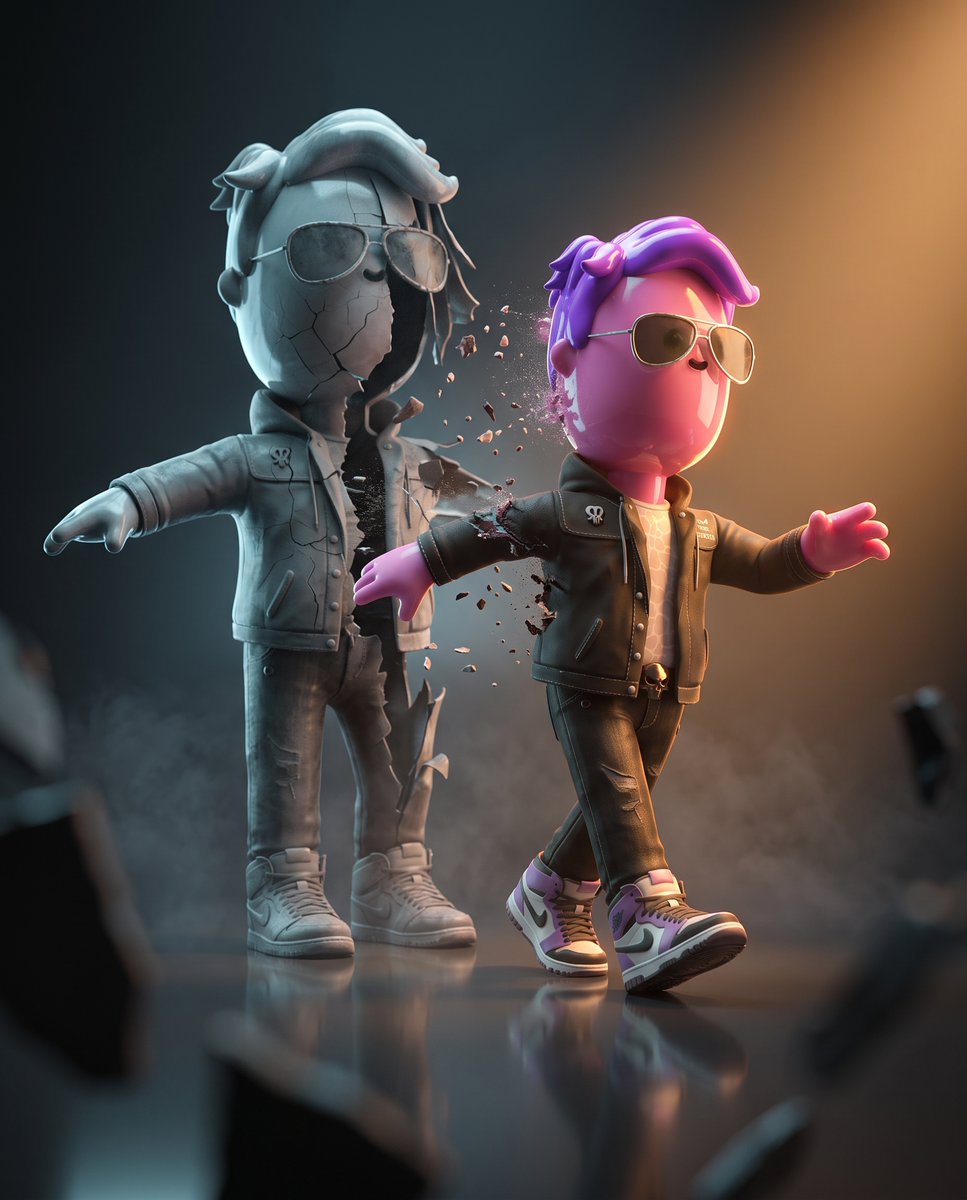
提示词分享 🚨 旧的外壳从来就不是为了永久存在而设计的。 @goodvibesclub 提示词 👇 创建一个电影化的超现实场景:已上传的参考角色正处于一次物理蜕变的精确中点,角色正在向前行走,...
中文说明
提示词分享 🚨 旧的外壳从来就不是为了永久存在而设计的。 @goodvibesclub 提示词 👇 创建一个电影化的超现实场景:已上传的参考角色正处于一次物理蜕变的精确中点,角色正在向前行走,而其旧的外在形态正在它身后裂开,像一个被遗弃的旧壳。 这次蜕变必须感觉上是进化性的、情感性的、且在物理上可信的,而不是像换装。 相似度完整性 严格保留已上传角色的以下精确特征: • 头部与身体的比例 • 眼睛的形状、间距和风格化方式 • 面部结构 • 轮廓剪影 • 原始解剖结构 • 核心材质身份 • 可识别的设计语言 不要将其拟人化。 不要凭空添加面部特征。 如果原参考中没有嘴或鼻,则不要添加。 不要改变手指数量、肢体结构或比例。 正在浮现的新角色必须保持毫无疑义地是同一个个体。 蜕变概念 角色正以对角线方向向前移动,已经...
原始 Prompt
Prompt Share 🚨
The old shell was never meant to last.
@goodvibesclub

Prompt 👇

Create a cinematic surreal scene of the uploaded reference character caught at the exact midpoint of a physical metamorphosis, walking forward while its old outer form is splitting open behind it like an abandoned shell.
The transformation must feel evolutionary, emotional, and physically believable, not like a costume change.

Likeness Integrity
Preserve the uploaded character’s exact:
• head-to-body proportions
• eye shape, spacing, and stylization
• facial structure
• silhouette
• original anatomy
• core material identity
• recognizable design language
Do not humanize.
Do not invent facial features.
Do not add a mouth or nose if absent from the reference.
Do not change finger count, limb structure, or proportions.
The emerging character must remain unmistakably the same individual.

Metamorphosis Concept
The character is moving diagonally forward, already partially free from an enormous cracked outer shell shaped like its previous exact likeness.
The abandoned shell remains standing behind it for one frozen instant, split vertically through the torso and head.
It is hollow.
Fragments of the old surface peel backward in thin plates, fibers, flakes, translucent membranes, or material-specific fragments depending on the uploaded character’s original construction.
The transformation begins from the back and travels forward through the body.
The front half of the character remains recognizable and structurally intact.
The rear edges are still transitioning.
Small fragments separate into the air along the transformation boundary, forming a visible trail between what the character was and what it is becoming.
Do not create a completely different creature.
The metamorphosis changes surface state, age, refinement, energy, and material expression, while preserving anatomy and identity.
The emerging form should feel more resolved, powerful, and alive, as though the character has outgrown its former physical state.

Pose
Capture the character during one deliberate step forward.
One leg is leaving the broken shell behind.
The torso rotates slightly away from it.
One arm or equivalent limb reaches forward into open space while the opposite side is still partially connected to the collapsing shell.
The pose should communicate effort and release rather than victory.
No static standing pose.

Camera & Perspective
Camera positioned extremely low, almost touching the floor.
18–22mm close wide-angle lens.
Three-quarter rear-side perspective so both the emerging character and abandoned shell remain visible.
The character advances diagonally toward the lens.
The nearest limb appears enlarged naturally through perspective.
The broken shell rises behind the character and partially exits the upper frame.
Slight 6–8 degree horizon tilt.
Composition must feel unstable and transitional.

Depth of Field
Primary focal plane locked on:
the character’s eye closest to camera + the exact boundary where old material becomes new.
Those areas are razor sharp.
The forward limb is slightly softer from lens proximity.
The abandoned shell progressively falls out of focus.
Fragments farther behind dissolve into creamy atmospheric blur.
No full-frame sharpness.

Lighting
Two opposing directional light states define the transformation.
Behind the character:
cold, desaturated blue-grey backlight strikes the abandoned shell.
Ahead of the character:
a hard warm directional beam cuts across the emerging form.
The transformation boundary sits precisely where the warm and cool lighting collide.
Strong rim separation along cracking edges.
Deep shadow pockets inside the hollow shell.
Minimal frontal fill.
The inside of the abandoned shell should feel almost black.

Material Detail
In the focal transformation zone, show extreme micro-detail:
• cracked surface edges
• torn fibers or fractured material layers
• microscopic dust
• tiny suspended fragments
• subtle wear
• realistic thickness of the old shell
Adapt every detail to the character’s actual material.
Do not replace vinyl with flesh, fabric with skin, metal with bone, or any other biological interpretation.

Environment
A vast dark minimal space with a slightly reflective ground plane.
No recognizable room.
No distracting props.
The floor catches faint reflections of the character, broken shell, and drifting fragments.
Thin atmospheric haze creates depth behind the subject.
A few transformation fragments pass very close to the camera, heavily blurred, creating foreground obstruction.

Color Grade
Old state:
cold graphite, desaturated cyan, faded versions of the original palette.
Emerging state:
the character’s original colors gradually regain richness and dimensionality toward the front of the body.
Warm amber highlights interact with the restored colors.
Controlled saturation.
Deep blacks.
Soft highlight roll-off.
No neon color flooding.

Emotional Tone
Metamorphosis as irreversible departure.
The old self is still recognizable behind the character, but it can no longer contain them.
The image should feel like the single frame where identity survives transformation while the former version becomes an empty relic.
No typography.
No decorative butterflies.
No generic glowing aura.
No second unrelated creature.
No anatomy mutation.
No centered symmetry.
No flat lighting.
No evenly sharp frame.
No clean beauty-shot pose.
ar 4:5