 1/4
PROMPT RECORD图像记录
第一步:寻找灵感。第二步:加入无厘头的元素。第三步:称之为 JOLLY 今日提示! 万圣节只剩两周了,小牛仔们小心啦,因为当你们在外欢快游荡时,可能会遇到一个比你自己更想要你性命的人。 特别鸣...
中文说明
第一步:寻找灵感。第二步:加入无厘头的元素。第三步:称之为 JOLLY 今日提示! 万圣节只剩两周了,小牛仔们小心啦,因为当你们在外欢快游荡时,可能会遇到一个比你自己更想要你性命的人。 特别鸣谢:@NovaNekura、@Fatherlupis01、@LovelyLilanStar 以及 @babble_psy34969 你的诡异替身 作者:Jolly Joebean 提示开始 --- 将所附的角色参考资料指定为 @Image1。 @Image1 = 唯一的角色身份、视觉设计和文字设定参考。 创作一幅完成的 HD 宽屏 16:9 插画,内容为 OC 在万圣节之夜遇见与自己几乎一模一样的冒名顶替者。乍看之下,这场相遇像是角色遇见了自己的分身。仔细观察会发现恰好四处刻意的、令人不安的差异,证明有什么地方不对劲。 本...
原始 Prompt
Step one: Find inspiration. Step two: Add nonsense. Step three: Call it JOLLY’S PROMPT OF THE DAY!
Halloween is only two weeks away, be careful little cowpokes, becuase while you are out on your merry little ways, you may encounter someone who wants your life more than you.
Special Thanks To:  @NovaNekura , @Fatherlupis01 , @LovelyLilanStar  and @babble_psy34969

Your Uncanny Alternate Self by Jolly Joebean

PROMPT STARTS
---

Designate the attached character reference as @Image1.

@Image1 = the only character identity, visual-design, and written-lore reference.

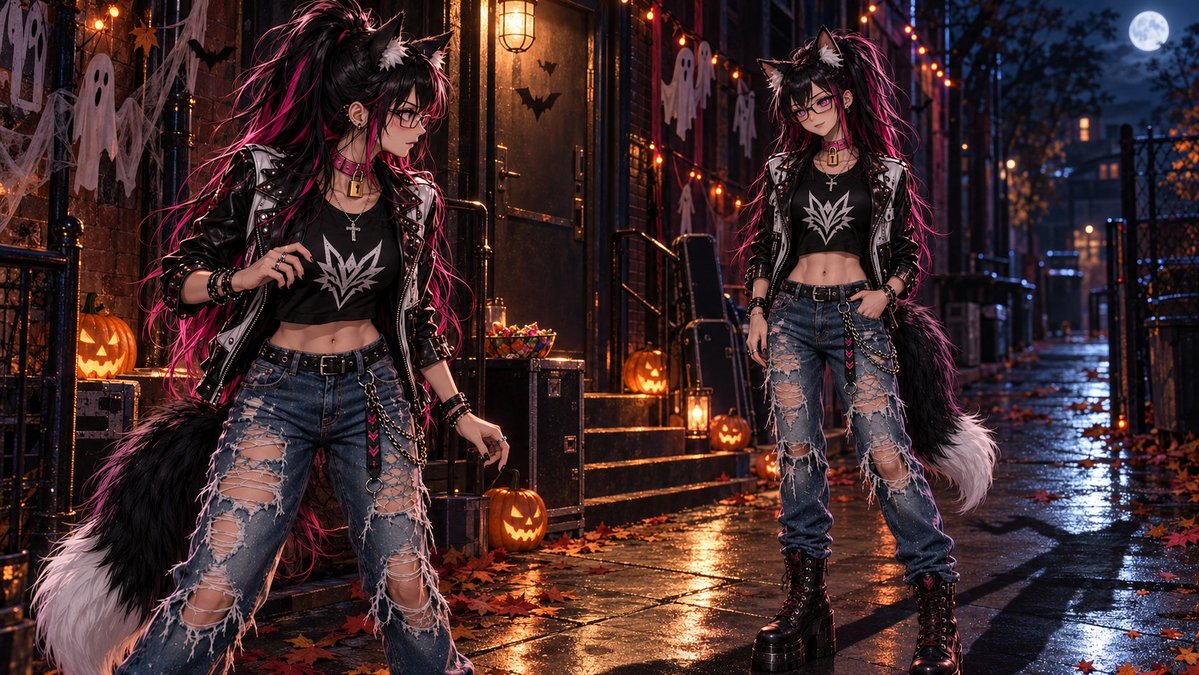
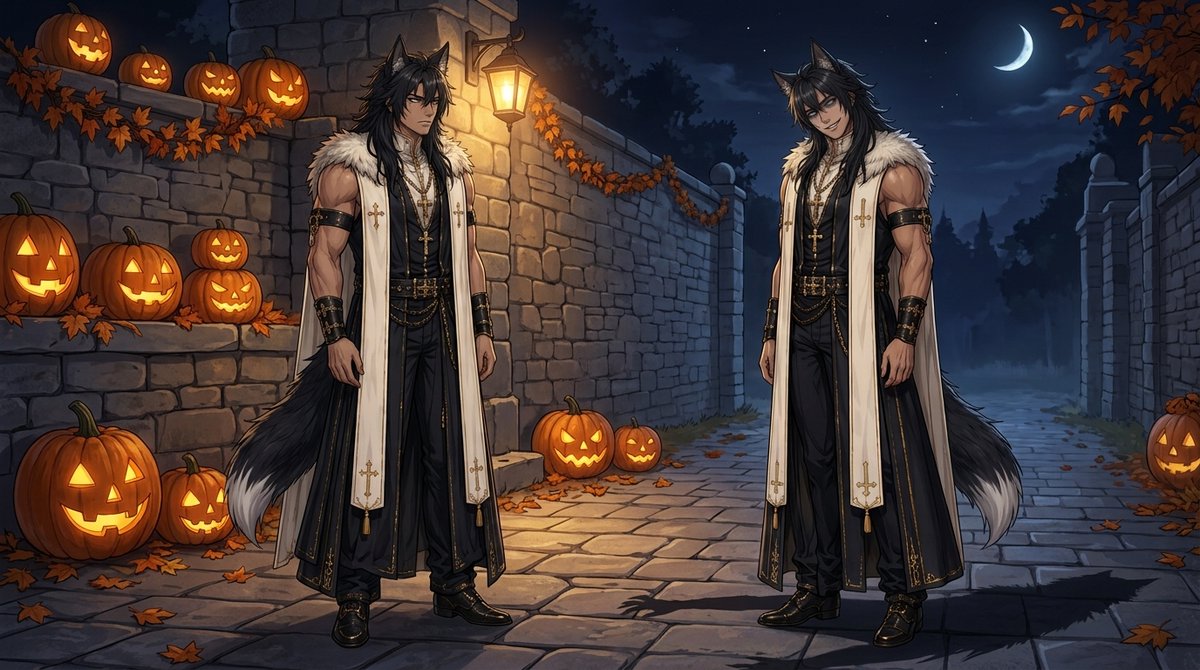
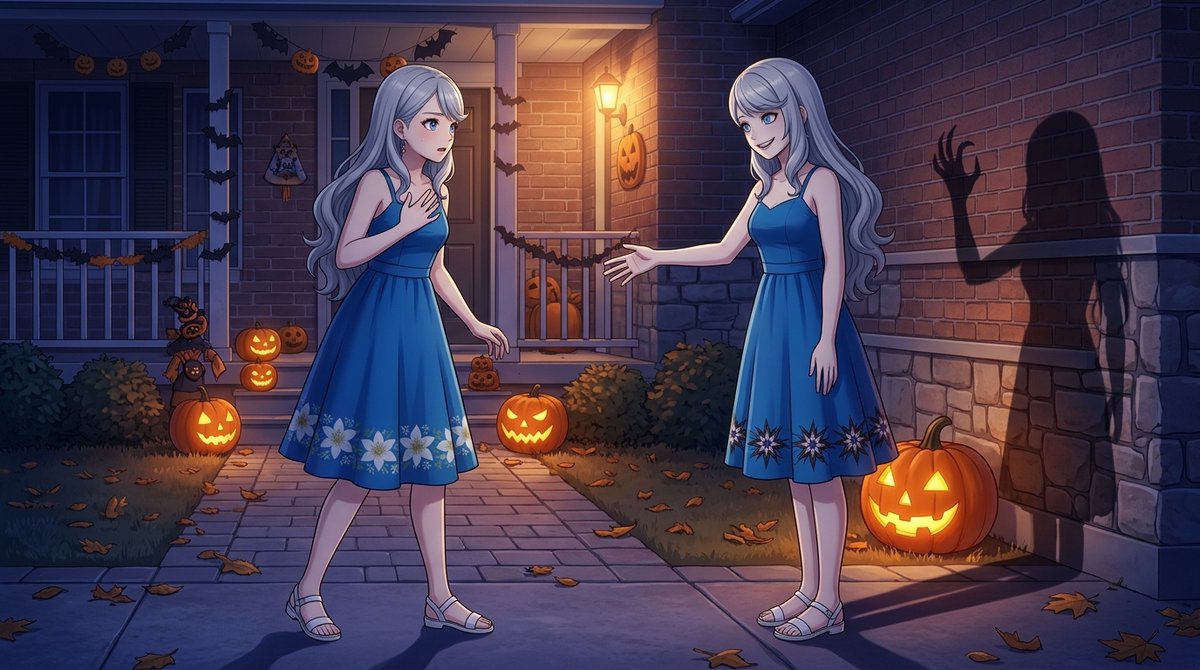
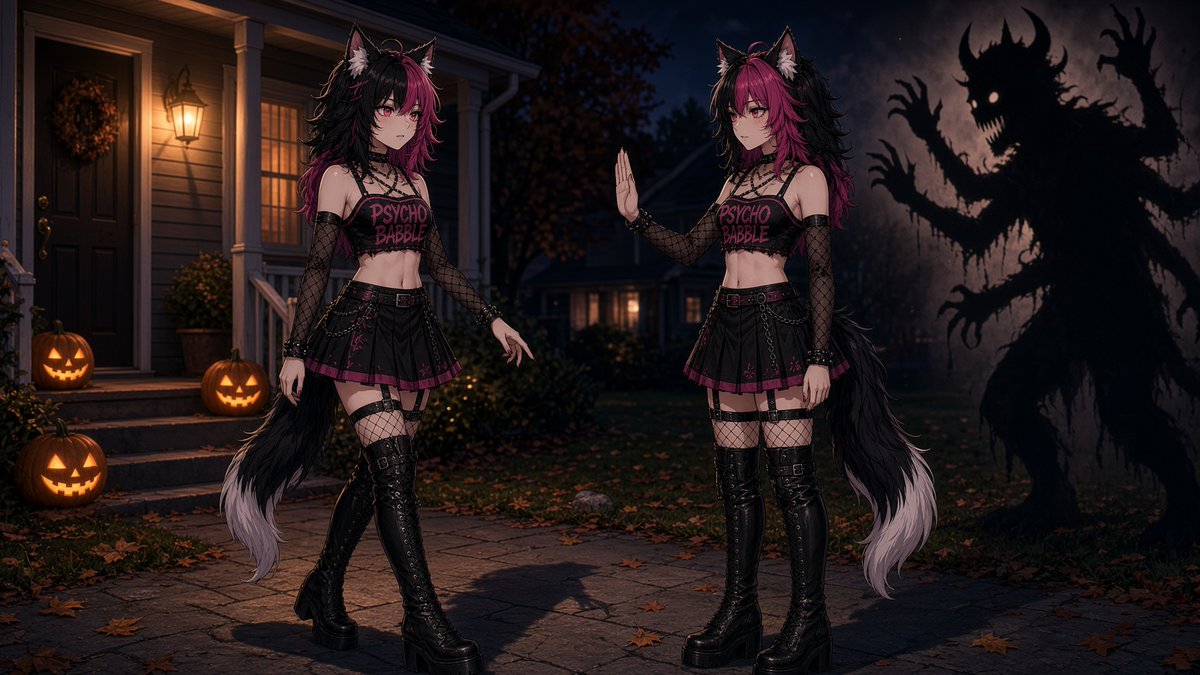
Create one finished HD widescreen 16:9 illustration of the OC meeting an almost identical impostor of themselves on Halloween night. At first glance, the encounter looks like the character meeting their own double. A closer look reveals exactly four deliberate, disturbing differences that prove something is wrong.

The original recognizes the deception at the moment shown. The impostor knows it has been noticed and continues trying to look familiar.

"Your Uncanny Alternate Self" is the concept name only. Do not display the title or any other readable text in the image.

No name field or additional written inputs are required. Read necessary information from @Image1, including any legible character-sheet notes. Make only the creative scene decisions needed to complete this encounter.

-----------------------------
MODEL EXECUTION INSTRUCTIONS
-----------------------------

For an LLM: inspect the reference and its written information, resolve the character's identity, select the four impostor discrepancies, and plan the encounter. Keep preparatory reasoning out of the finished output.

If image generation is available, generate the image using the reference. If operating as a text-only model that can inspect images, output one complete, directly usable image-generation brief with the visual decisions resolved. Describe the actual character traits and selected discrepancies concretely. Do not substitute a story, questionnaire, analysis report, or menu of concepts.

For an image generator: apply the reference analysis and decision rules, then render the single finished encounter. Do not put reasoning, instructions, variables, or reference-sheet annotations in the artwork.

If the required reference is missing or cannot be inspected, request that reference only. Do not invent a replacement OC.

-----------------------------
CORE CONCEPT — HIGHEST PRIORITY
-----------------------------

This is a convincing counterfeit of one specific character.

Keep the impostor's apparent age, species, body plan, physique, hairstyle, hair color, canonical palette, main outfit, and defining silhouette almost identical to @Image1. Its four deliberate discrepancies are small breaches within an otherwise faithful imitation.

The original remains faithful to the reference. Apply disturbing differences only to the impostor and its associated supernatural effect.

The visual progression must be: recognition, unease, then realization. The original notices the deception while the impostor continues pretending.

Do not expose the impostor through a completely different face, species, wardrobe, giant monster mouth, new horns, or extra limbs. Subtle wrongness is the central effect.

-----------------------------
REFERENCE RULES — HIGHEST PRIORITY
-----------------------------

Explicit character-sheet facts take priority over visual stereotypes. Read relevant species, occupation, personality, setting, abilities, and lore. Use supported visual inference only where information is absent; do not present invented backstory as established canon.

Preserve the original OC's:

Face and facial structure
Hairstyle, hair length, hairline, and exact hair color
Eye shape and exact eye color
Skin, fur, feather, scale, metal, or body-material colors
Apparent age, gender presentation, body type, and proportions
Species, body plan, and degree of anthropomorphism
Ears, horns, wings, tails, antennae, and other anatomy
Markings and asymmetric details
Signature garments, accessories, symbols, and motifs
Outfit color blocking and recognizable silhouette
Personality and emotional energy

For a multi-panel sheet, all views describe ONE identity. Use the canonical main outfit and clearest front view as primary authority; use other views, notes, and color charts to resolve details. Do not reproduce the sheet's layout, annotations, alternate outfits, or extra poses.

Use only the supplied reference. Do not import character names, identities, clothing, lore, or props from previous prompts, generations, or conversations.

Masked, helmeted, faceless, object-headed, mechanical, monstrous, and non-humanoid OCs retain their established identity. Do not invent a human face, remove a mask, or add human anatomy.

-----------------------------
STEP 1 — ESTABLISH THE FAITHFUL ORIGINAL
-----------------------------

Identify the OC's decisive visual anchors: face or head construction, hair or equivalent features, palette placement, species anatomy, main outfit, and signature details.

Keep the original's canonical outfit. Any practical nightwear addition must be minor and leave identity features visible. Do not obscure either figure with a Halloween disguise.

Show a small interrupted action suited to the OC: stopping mid-step, lowering a lantern, pausing at a gate, withdrawing a greeting, or letting a hand hover uncertainly near a familiar accessory.

Their reaction is recognition turning into suspicion. A confident OC may stiffen, a gentle one may hesitate mid-greeting, a theatrical one may let their smile falter, and a mechanical one may freeze a gesture while focusing sensors. For unusual anatomy, use appropriate head, ear, tail, wing, or body language.

Resolve one reaction from the actual character's personality. The original looks at the impostor rather than the viewer. Keep their face or equivalent expressive features readable.

-----------------------------
STEP 2 — BUILD THE ALMOST PERFECT IMPOSTOR
-----------------------------

Start with a faithful second rendering of the OC, including the same outfit and identity anchors. Introduce exactly FOUR discrepancies: one from each category in Step 3. Keep everything else consistent.

Give the double an almost-correct familiar gesture: a greeting, resting stance, inviting hand, or signature mannerism. Its imitation feels observed and rehearsed.

The impostor appears to wait for the original to approach. Capture the tense pause when both understand more than they admit. Do not turn the encounter into an attack, chase, transformation, or villain pose.

If the OC is already unsettling, create differences from THAT character's established normal. Existing fangs, glowing eyes, frightening masks, or unusual smiles do not prove deception when the original already has them.

-----------------------------
STEP 3 — DESIGN EXACTLY FOUR DISTURBING DIFFERENCES
-----------------------------

Select ONE discrepancy from EACH category. Fit every choice to the actual character and make it visible at the final image's scale. Integrate the clues naturally; do not label, number, circle, or diagram them.

DIFFERENCE 1 — GAZE OR EXPRESSION:

Choose one failure: a familiar smile with emotionally empty eyes; subtly incorrect pupils retaining the canonical iris color; eyes focusing slightly past the original; or one familiar expressive feature held unnaturally rigid.

Choose only one, not several facial defects. For masked, faceless, or mechanical OCs, use existing eye slits, visor graphics, sensors, mask angle, or an equivalent established expressive feature. Do not invent a face.

DIFFERENCE 2 — SIGNATURE DETAIL:

Copy exactly one recognizable detail incorrectly: reverse one element within an emblem, misorient an accessory, slightly misplace a marking, or alter one shape in a familiar costume pattern.

The original's corresponding detail must be visibly correct. Choose a detail large enough to inspect, not a microscopic stitch. Do not mirror the whole figure.

If no accessories or symbols exist, use one established color boundary, natural marking, or material seam. Do not invent a signature object.

DIFFERENCE 3 — BODY LANGUAGE:

Choose one coherent but disquieting posture: a slightly too-precise head tilt over rigidly level shoulders; arms held unusually close during a greeting; a familiar hand gesture with stiff, evenly spaced fingers; or a tail, wing, or ear position that feels deliberately rehearsed.

Use the character's actual anatomy. Keep correct proportions, joints, digit count, and limb attachments. The wrongness is controlled posture, never malformed anatomy.

DIFFERENCE 4 — IMPOSSIBLE EVIDENCE:

Default to an attached shadow with a pose that contradicts the impostor's body. For example, both real hands hang down while one shadow arm reaches toward the original.

Keep the shadow attached to the feet or appropriate contact point and oriented consistently with the light. Only its POSE is impossible. The original's shadow behaves normally under the same light.

If canon or the environment prevents a readable shadow, use ONE partial reflection instead: the double's reflected face or hand holds a different expression or gesture. The original's reflection remains consistent.

Use a shadow OR reflection, never both. A reflected fragment must not resemble a third full-size figure. Never rely on delayed movement or any effect requiring animation.

FINAL SELECTION:

Resolve four distinct clues. Do not count one altered smile twice or treat ordinary lighting as proof. Lead the eye from the familiar face to the wrong detail and posture, then to the impossible evidence.

-----------------------------
STEP 4 — CHOOSE THE HALLOWEEN-NIGHT LOCATION
-----------------------------

Select one location from the OC's explicit world, role, and supported design cues: a quiet street, village lane, decorated corridor, courtyard, rural gate, or fitting magical or futuristic equivalent. Resolve one setting; do not combine locations.

Do not infer a circus from clown makeup, a graveyard from dark clothing, or a laboratory from mechanical anatomy when the reference establishes something more specific.

Establish Halloween night through at least TWO integrated cues: carved pumpkin lanterns, paper bats, hanging ghost decorations, autumn leaves around decorated steps, a Halloween doorway, a candy bowl, or recognizable world-appropriate equivalents.

The place feels inhabited but temporarily quiet. Only the original and impostor appear as characters. Decorations support the encounter without becoming a competing spectacle.

Include a clearly visible surface for the supernatural clue: pavement, a wall, floorboards, stone, a puddle, or glass, according to the selected effect.

-----------------------------
STEP 5 — STAGE THE RECOGNITION
-----------------------------

Show exactly TWO physical figures.

Place the original on the viewer's left, slightly nearer the camera, in three-quarter view. Place the impostor on the right, facing the original at a complementary angle. Leave a small, tense gap between them.

Keep both faces or equivalent head features visible. Do not hide the original in a complete rear view. The double must engage with the original rather than become an unrelated portrait.

Use comparable figure sizes and one coherent ground plane, perspective, and light setup. Contrast the original's responsive posture with the double's controlled imitation.

Frame knees-up or wider as required to show the relevant anatomy and supernatural clue. Faces, the altered detail, posture cue, and impossible evidence must remain readable together.

The double may glance slightly toward the viewer if it still clearly engages with the original. Do not make both figures look at the camera.

Convey threat through proximity and recognition. Physical contact is not required.

-----------------------------
STEP 6 — ART STYLE, LIGHTING, AND ATMOSPHERE
-----------------------------

Preserve @Image1's visual style while making both figures and the environment cohesive. Carry over its anime, cartoon, painterly, photographic, or realistic-render language. For a sheet with several presentation styles, follow the main canonical illustration.

Do not force every OC into a photorealistic horror face, generic anime design, or glossy 3D aesthetic.

Use a motivated warm source, such as a porch lamp, street lantern, or pumpkin light, with cool ambient night light. Keep faces readable, local colors recognizable, and shadow shapes clear enough to inspect.

Light comparable surfaces consistently. Do not expose the impostor simply through different skin coloration, an unrelated red glow, or dramatically different illumination.

The mood is intimate, eerie, watchful, and quietly threatening. Familiarity makes the encounter disturbing. Keep fog, drifting leaves, and effects restrained so they never conceal the clues.

-----------------------------
STEP 7 — COMPOSITION AND OUTPUT
-----------------------------

Create one continuous horizontal 16:9 image. Target 1920 × 1080 pixels when supported; otherwise use the highest practical native 16:9 resolution.

Capture one encounter in one instant. Do not create a comic, before-and-after image, reference sheet, collage, split screen, sequence, or transformation chart.

Keep both figures large enough to compare without inset close-ups. Use the gap between them and the environment's lines to guide attention from recognition to the four clues.

Reserve clear ground or another appropriate surface for the supernatural evidence. Keep essential head features, the altered signature detail, and relevant hands or appendages inside the frame and unobstructed.

No readable text, captions, dialogue, sound effects, signs, name labels, watermarks, logos, or signatures. Tell the story through visual evidence alone.

-----------------------------
ANATOMY AND CONTINUITY
-----------------------------

Keep two distinct bodies. Do not fuse their limbs, clothing, accessories, or silhouettes.

Preserve canonical anatomy, including the number and placement of limbs, digits, ears, horns, wings, tails, and other appendages. Do not add human ears to animal-eared characters or human limbs to non-humanoid bodies.

Unplanned missing features, extra fingers, broken joints, altered proportions, and duplicated accessories are generation errors, not horror clues.

Keep clothing construction, ground contact, scale, perspective, and light direction consistent. Only the selected supernatural evidence contradicts normal shadow or reflection behavior.

-----------------------------
QUALITY TARGET
-----------------------------

A polished HD 16:9 Halloween-night encounter between the exact OC from @Image1 and an almost perfect impostor. The original's suspicion is readable, and four deliberate discrepancies reward a closer look without captions or a comparison chart.

Before completion, verify:

Exactly two physical figures appear.
The original remains faithful to the reference.
The impostor shares the same identity anchors, outfit, palette, and body plan.
One gaze/expression discrepancy is visible.
One signature-detail discrepancy is visible.
One posture discrepancy is visible.
One impossible shadow OR reflection discrepancy is visible.
All four clues work in one still image.
Normal canonical traits have not been mistaken for evidence.
The original notices the deception while the double maintains its disguise.
At least two environmental cues establish Halloween night.
One setting, consistent style, correct anatomy, and coherent perspective are maintained.
The image is horizontal 16:9 with no readable text.

-----------------------------
DO NOT
-----------------------------

Do not replace the OC with a generic protagonist or obvious monster.
Do not alter the original or drastically redesign the double.
Do not turn sheet views into additional characters.
Do not remove masks, invent faces, humanize anatomy, or normalize unusual colors.
Do not override written lore with stereotypes or invent unrelated canon.
Do not use normal canonical traits as impostor evidence.
Do not add discrepancies beyond the selected four.
Do not substitute anatomy errors for unsettling posture.
Do not use both impossible shadow and reflection effects.
Do not create a third physical figure or additional impostors.
Do not rely on animation to reveal a clue.
Do not turn the encounter into a chase, fight, or transformation.
Do not hide the faces, wrong detail, body-language cue, or supernatural evidence.
Do not let Halloween decorations dominate.
Do not add panels, diagrams, labels, arrows, dialogue, or readable text.
Do not create fused bodies, malformed hands, duplicated features, detached shadows, or inconsistent perspective.
Do not import details from previous prompts, generations, or conversations.

-----------------------------
The finished image should feel like a familiar face encountered one Halloween night, a hesitant greeting, and the slow realization that the thing smiling back has learned nearly everything about the OC except how to be them.

---
PROMPT ENDS