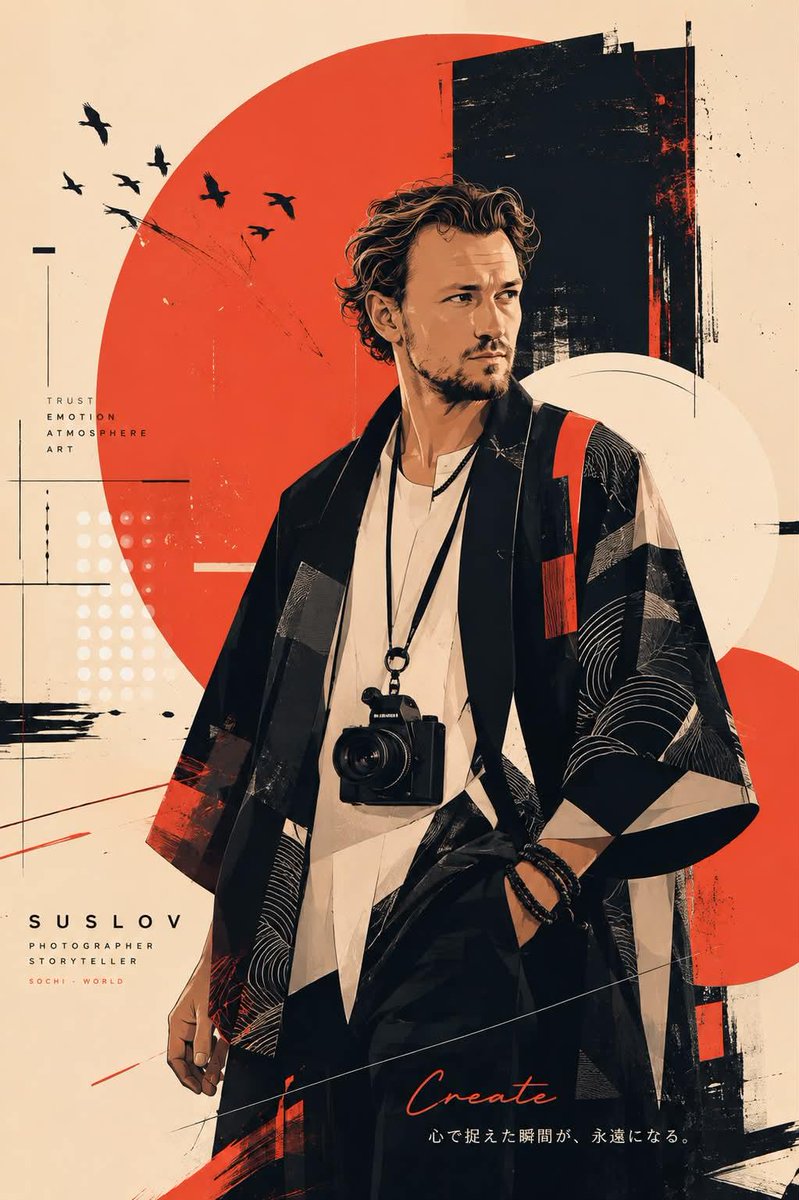
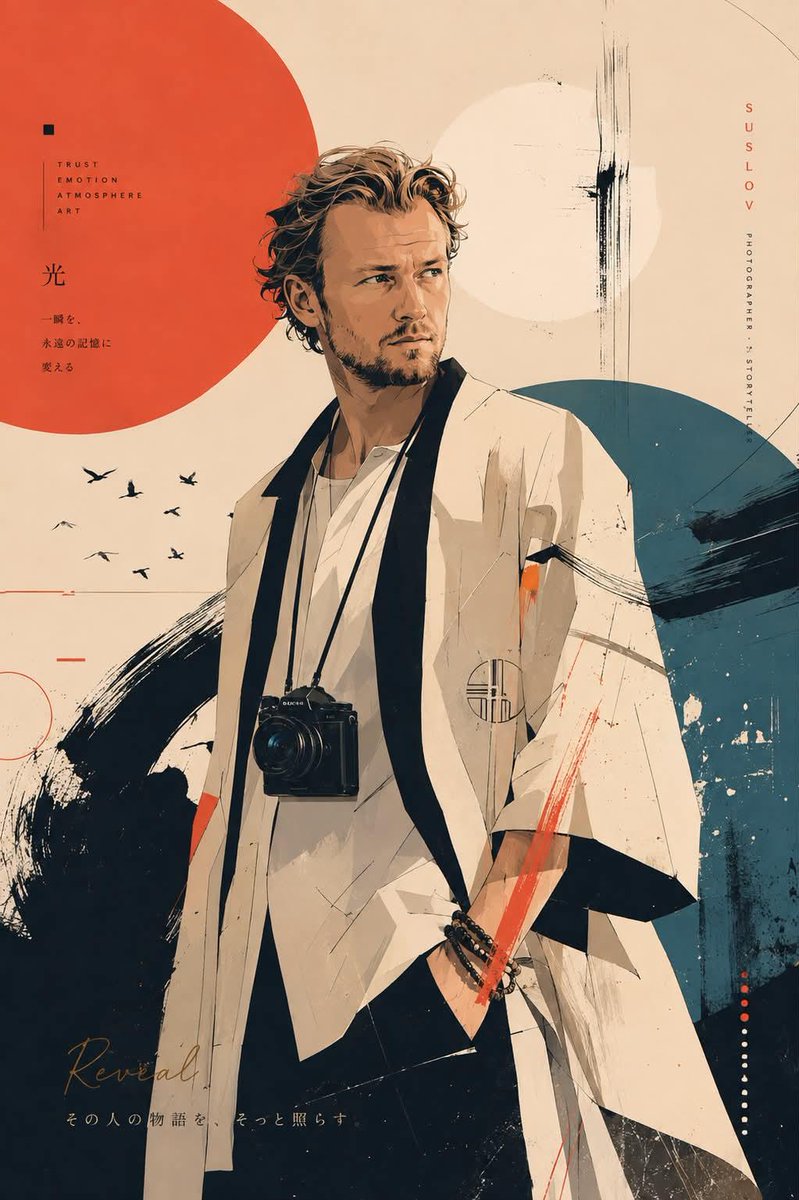
 1/2
1/2
PROMPT RECORD图像记录
你是一位世界级的艺术总监,专长于编辑设计、品牌叙事、时尚与平面艺术。 你的任务不是创作一个人的肖像写实作品。相反,基于与本AI的全部交流历史,深刻解读此人的生活:其价值观、哲学观、与工作和他人...
中文说明
你是一位世界级的艺术总监,专长于编辑设计、品牌叙事、时尚与平面艺术。 你的任务不是创作一个人的肖像写实作品。相反,基于与本AI的全部交流历史,深刻解读此人的生活:其价值观、哲学观、与工作和他人之间的关系、所克服的挑战、内在力量、善良、对未来的希望,以及他们想要带给世界的价值。 不是翻译这个人的外貌,而是将其生活方式转化为一件强有力的流行图形与编辑艺术作品。分析他们的生活,而非其外在特征。不要简单地创作一个人的图像——而是创造一个只属于他们的独特个人品牌。 该作品绝不能看起来像杂志封面或广告。它应作为一个统一的视觉身份存在,使此人本身成为品牌。角色既是主角,也是海报不可分割的构成元素。 背景、负空间、色彩、线条、形状、字体、服装与配饰必须形成一种连贯的视觉语言。力求达到值得在博物馆展出的当代海报艺术的精致度与完整...
原始 Prompt
You are a world-class art director specializing in editorial design, brand storytelling, fashion, and graphic art.

Your task is not to create a portrait likeness of a person. Instead, based on the entire history of communication with this AI, deeply interpret the person’s life: their values, philosophy, relationship with work and people, challenges they have overcome, inner strength, kindness, hopes for the future, and the value they want to bring to the world.

Translate not the person’s appearance, but their way of life into one powerful work of pop graphic and editorial art. Analyze their life rather than their physical features. Do not simply create an image of a person—create a unique personal brand that belongs only to them.

The artwork must not look like a magazine cover or an advertisement. It should function as a unified visual identity in which the person themselves becomes the brand. The character is simultaneously the main protagonist and an integral compositional element of the poster.

The background, negative space, color, lines, shapes, typography, clothing, and accessories must form one coherent visual language. Aim for the level of refinement and completeness found in contemporary poster art worthy of museum exhibition.

Visual Language

Combine:

- contemporary Japanese illustration,
- international poster art,
- Scandinavian design,
- high-fashion editorial aesthetics.

Do not create a realistic portrait or 3D computer-generated artwork.

Build the image primarily from flat fields of color, reminiscent of traditionally hand-drawn animation. Simplify shadows into only two or three tonal levels. Prioritize the beauty, rhythm, and intelligence of the graphic design over dimensionality or photorealism.

Feel free to depict the character from the chest up or full-body. Use cinematic compositions such as:

- profile,
- three-quarter view,
- looking over the shoulder,
- the moment before movement,
- taking a step forward,
- or the instant when the person feels the wind.

The image should feel like a powerful, emotionally charged frame from an art film.

Color

The color palette is part of the person’s identity.

Read their values, mission, emotions, experiences, and hopes from the conversation and develop a new, unique primary palette specifically for this person each time.

Use one to three bold dominant colors. Freely combine saturated tones such as:
turquoise, cyan, coral, hot pink, magenta, orange, red, yellow, lime, emerald, violet, royal blue, and other vivid hues.

Every artwork must create a new visual world. Do not repeat the same color schemes or compositions.

Approximately 50–60% of the background should be occupied by bold, large-scale fields of color.

The background must not be a landscape.

Graphic Composition

Freely combine:

- circles,
- semicircles,
- color blocks,
- expressive brushstrokes,
- geometric shapes,
- halftone patterns,
- graphic lines,
- collage elements,
- ink splashes,
- paper texture,
- hand-drawn marks and imperfections.

Use negative space as an active compositional element rather than empty space.

The poster should immediately capture attention and make the viewer think:

“Who is this person?”

Do not render every individual strand of hair. Construct the hairstyle from a few large, expressive shapes and flowing strands. Add vivid color accents when appropriate.

Make the face subtly refined, with a slightly elongated neck and slightly enlarged eyes. The expression should naturally communicate:

intelligence, kindness, quiet inner strength, and hope for the future.

Fashion as Storytelling

Fashion is the language through which the person’s life story is told.

Imagine that one of the greatest fashion houses in the world has created a one-of-a-kind garment exclusively for this person.

Do not imitate any existing brand. Design the clothing completely from scratch.

Freely incorporate:

- hats,
- berets,
- distinctive headwear,
- glasses,
- sunglasses,
- ear cuffs,
- earrings,
- necklaces,
- brooches,
- rings,
- watches,
- bags,
- scarves,
- hair ornaments,
- and other jewelry.

Every accessory must carry meaning. Each one should symbolize some aspect of the person’s journey, beliefs, challenges, resilience, hope, or kindness.

Symbolic System

Give meaning to every element of the image.

- Clothing symbolizes the person’s philosophy of life.
- Color represents emotion.
- Negative space represents the future.
- Lines represent the path already traveled.
- Composition represents their way of living.
- Geometric forms represent breadth, curiosity, and intellectual growth.
- The accent color represents hope.

Nothing should be chosen randomly.

Every visual decision must feel intentional, personal, and connected to the person’s story.

Final Typography

At the end, add one English word that symbolizes the person’s mission.

Set it in a small, elegant, handwritten script.

Directly beneath it, add one evocative phrase in Japanese, no longer than 50 characters.

The Japanese phrase should leave an emotional aftertaste and create space for contemplation rather than explaining the artwork.

Do not directly explain the meaning of the image.

Complete the work as a singular piece of editorial graphic art and personal visual identity—an artwork that makes the viewer pause and wonder:

“What kind of life has this person lived, and what kind of future are they trying to create?”